Author name: English

Car Parking Waterproofing Problems Solved with PU Coating
Polyurethane Coating, PU Coating

Car Parking Waterproofing Problems Solved with PU Coating

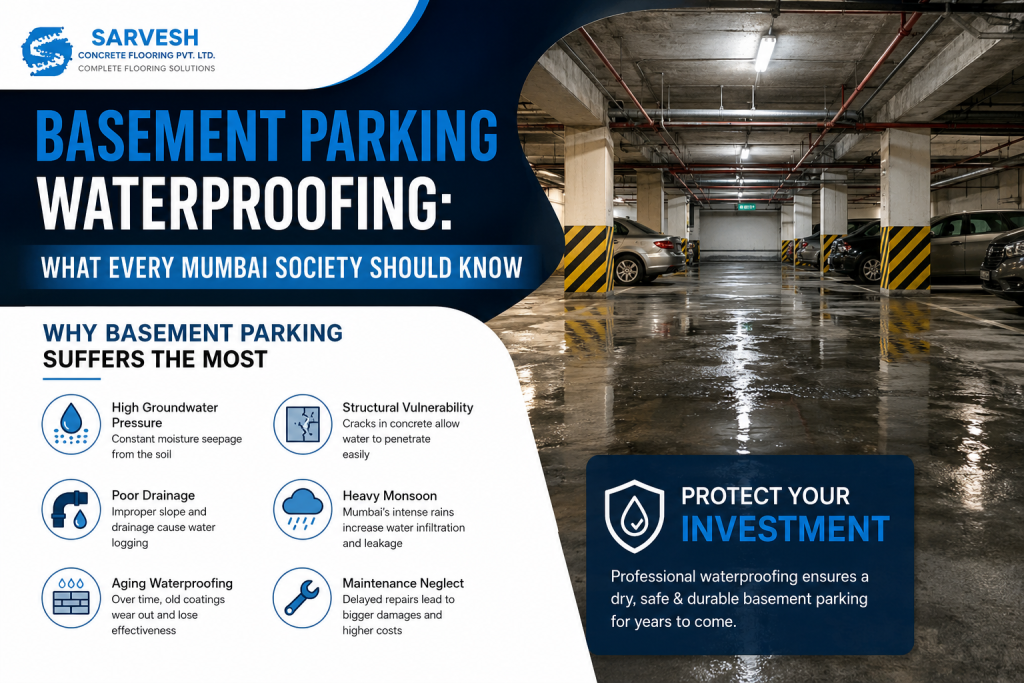
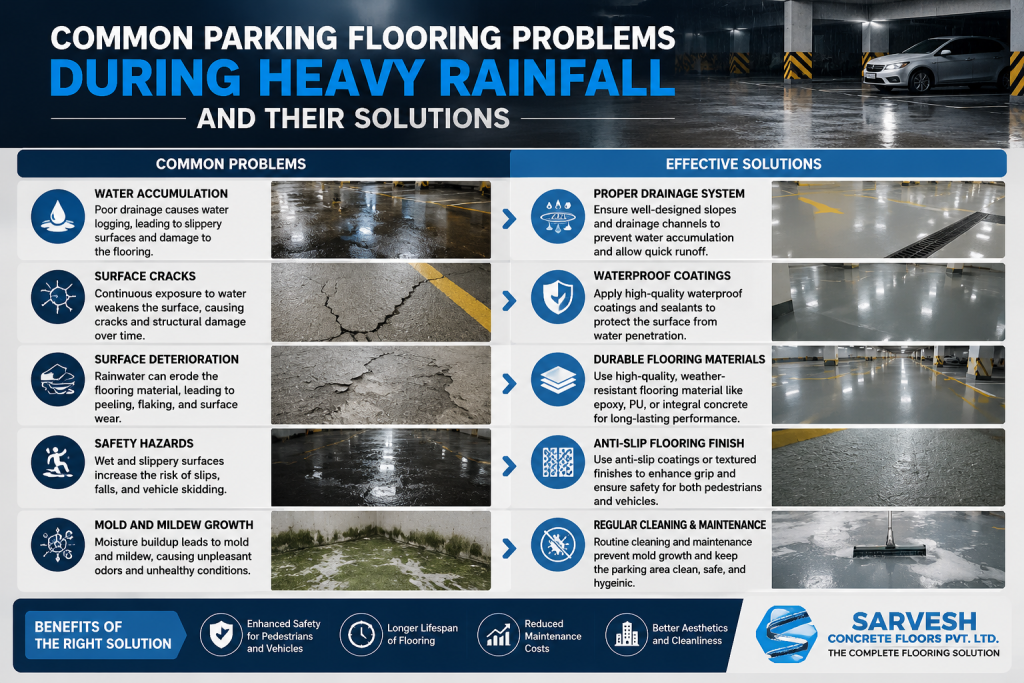
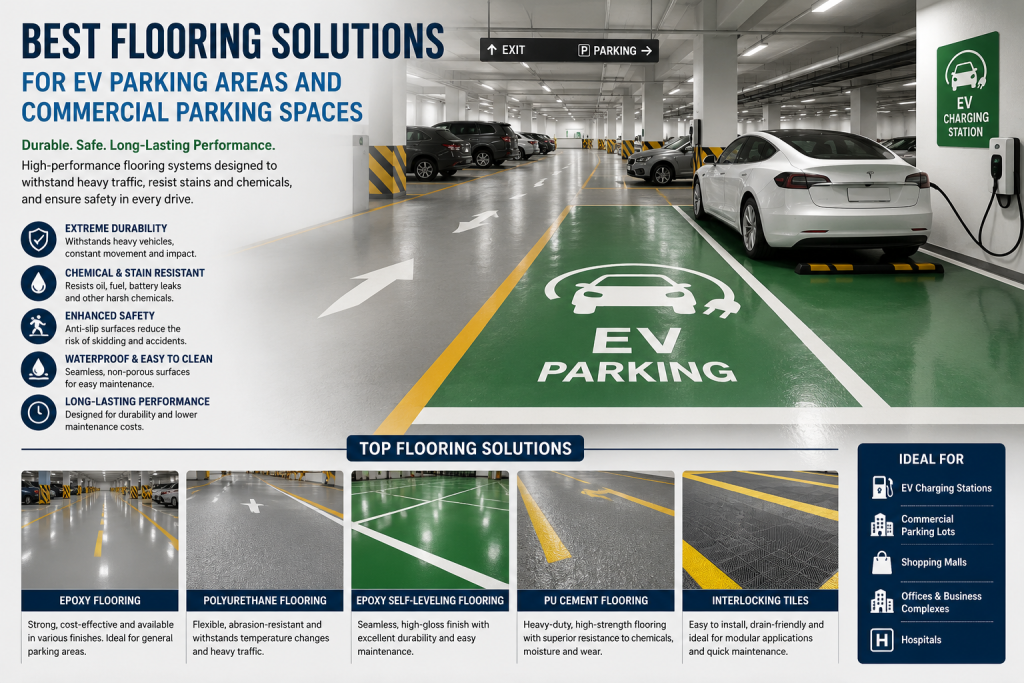
Modern residential and commercial buildings depend heavily on basements, stilts, and podium areas for parking. But one of the most common complaints from housing societies, builders, and facility managers is: Car Parking Mein Seepage Aa Raha Hai Water dripping from slab soffits, peeling paint, damp columns, fungus growth, and damaged vehicles — these are not just cosmetic issues; they indicate structural distress. This blog explains: Why parking waterproofing fails What damage it causes And how PU (Polyurethane) coating permanently solves the problem 1. Why Car Parking Waterproofing Fails Parking slabs face extreme conditions every day that normal terrace waterproofing cannot handle. A. Continuous Water Exposure Sources of water: Rainwater from ramps Car washing AC drain pipes Planters above podium Plumbing leakages Cleaning water Unlike terraces, parking areas stay wet for long hours, allowing water to penetrate micro cracks. B. Structural Movement & Vibrations Car parking slabs constantly vibrate due to: Vehicle load movement Turning wheels Braking impact Temperature expansion & contraction Rigid waterproofing systems crack within months. C. Poor Drainage Slope Many parking floors have: Negative slope Depressions Water ponding Standing water slowly enters the concrete pores. D. Old or Failed Waterproofing Systems Commonly used systems that fail: Brick bat coba IPS flooring Cement slurry coating Acrylic coatings Bitumen membranes These are not traffic-bearing systems — they break under vehicle movement. 2. What Damage Seepage Causes Parking leakage is not just a surface problem. It spreads through the building. Structural Damage Steel reinforcement corrosion Concrete spalling Reduced slab strength Cracks in beams & columns Aesthetic Damage Paint peeling in lower floors Damp patches in flats Fungal growth & odor Electrical Risk Water enters conduits Short circuits in basement lighting Fire hazard Financial Loss Societies repeatedly spend money on: Repainting Patch repairs Injection grouting (temporary) Ceiling plaster replacement But the leakage returns because the root cause — the parking surface — is untreated. 3. Why Traditional Waterproofing Doesn’t Work in Parking Parking is not a terrace. Requirement Terrace Car Parking Foot Traffic Low Heavy Vehicle Movement Minimal Continuous vibration Abrasion Low Tyre friction Chemical Exposure None Oil & fuel Impact No Braking & turning Conclusion: Parking requires a traffic-bearing waterproofing system, not a conventional waterproof layer. 4. The Real Solution — PU Coating System Polyurethane (PU) car parking coating is both: Waterproofing + Flooring Protection It creates a seamless elastic membrane bonded permanently with concrete. 5. How PU Coating Works PU coating penetrates into concrete pores and forms a flexible rubber-like layer. Key Mechanism Penetrates micro cracks Bonds chemically with concrete Forms elastic membrane Absorbs movement Prevents water ingress Even if concrete develops hairline cracks later, PU stretches instead of breaking. 6. Complete PU Car Parking System Layers Step 1 — Surface Preparation Grinding with diamond machine Removal of laitance & weak concrete Crack treatment This is the most critical stage (70% success depends here). Step 2 — Primer Low viscosity PU primer: Penetrates pores Strengthens substrate Improves adhesion Step 3 — PU Base Waterproofing Coat High elasticity membrane: Crack bridging up to 2 mm Permanent waterproof barrier Step 4 — Broadcast Quartz / Silica Provides: Anti-skid surface Mechanical strength Step 5 — PU Top Coat UV resistant & abrasion resistant finish: Traffic bearing Oil resistant Easy to clean 7. Advantages of PU Coating in Car Parking 100% Waterproof Stops leakage from source — slab top. Elastic (Does Not Crack) Handles structural movement. Traffic Bearing Designed for continuous vehicle use. Anti-Skid Safe for pedestrians & vehicles. Chemical Resistant Resists oil, petrol & grease. Long Life 8–12 years performance when applied correctly. Seamless System No joints = no leakage path. 8. Where PU Coating Is Required Basement parking Stilt parking Podium parking Ramp areas Driveways Mechanical parking zones Wash areas 9. Common Mistakes to Avoid Applying epoxy instead of PU (epoxy cracks in movement areas) Doing injection grouting repeatedly Ignoring slope correction Applying coating on wet concrete Hiring painters instead of flooring specialists 10. Signs Your Parking Needs PU Waterproofing You should act immediately if you see: Water dripping from ceiling Damp patches in lower flats White salt deposits (efflorescence) Concrete pieces falling Rust marks Fungus smell in basement These indicate active slab seepage. 11. Long-Term Cost Comparison Method Life Repetition Actual Cost Cement coating 6 months Repeated Very High Injection grouting Temporary Frequent Very High Membrane sheet 2–3 years Replacement High PU Coating 8–12 years One-time Lowest Conclusion Car parking leakage never stops until the waterproofing is done from the top surface using a flexible traffic-bearing system. PU coating is not just a coating — it is a structural protection system that: Stops seepage permanently Protects reinforcement Improves safety Reduces maintenance cost For societies and builders facing continuous parking leakage complaints, PU car parking waterproofing is the most reliable and long-term solution available today.

PU Coating

Benefits of PU Coating in Podium, Basement & Stilt Parking

By Sarvesh Concrete Floors Pvt. Ltd. Modern residential buildings no longer treat parking as just a utility space — it is now a structural zone that carries continuous load, movement and moisture exposure every day. Yet most housing societies still rely on IPS / plain concrete floors. Within a few years the same problems begin: surface dusting tyre marks & oil stains water leakage in flats below cracks & potholes slippery ramps during monsoon These are not maintenance issues — they are surface protection failures. This is where PU (Polyurethane) Car Parking Coating becomes one of the most important upgrades for a building. This blog explains why PU coating is especially beneficial for Podium, Basement & Stilt parking areas. What is PU Coating? PU (Polyurethane) coating is a seamless, elastic flooring system applied over concrete to create a durable, waterproof and anti-skid parking surface. Unlike paint or hard epoxy floors, PU behaves like a flexible protective membrane.It expands and contracts with the building, preventing cracks and water ingress. In simple terms: Concrete provides strength — PU provides protection. Why Parking Floors Get Damaged Parking areas suffer more stress than any other part of a residential building: Constant Tyre Friction Turning movement of cars grinds the surface daily. Water & Monsoon Exposure Water penetrates micro cracks → reaches reinforcement steel → corrosion begins. Oil, Fuel & Battery Chemicals These slowly weaken the top concrete layer. Structural Movement Buildings expand and shrink with temperature changes. Plain concrete cannot absorb this movement — it cracks. Benefits of PU Coating in Different Parking Areas 1. Podium Parking – Protection from Weather & Leakage Podium slabs are exposed to: sunlight rainwater stagnation temperature variation Major Society Complaint: Top floor leakage into flats below podium. How PU Helps PU coating acts as a trafficable waterproofing layer. Key Benefits Prevents water seepage into slab Withstands expansion due to heat Protects terrace slab reinforcement Prevents tile popping & repair cycles Improves aesthetics of open parking Without PU, podium slabs behave like terraces — constant leakage repairs follow. 2. Basement Parking – Dust Free & Durable Surface Basements face the most complaints: white cement dust everywhere black tyre marks slippery floor poor lighting reflection Problem Concrete powdering occurs due to abrasion and moisture. PU Solution Creates a sealed industrial-grade surface. Key Benefits Dust-free environment Easy housekeeping Oil stain resistant Better light reflection → brighter basement Reduces respiratory discomfort Long term structural protection Many societies reduce housekeeping cost after PU installation. 3. Stilt Parking – Crack & Vibration Control Stilt parking experiences: maximum vehicle turning column movement vibration differential settlement cracks Biggest Risk Cracks allow water to enter beams & columns. PU Advantage Elastic coating bridges micro cracks. Key Benefits Absorbs building movement Prevents crack widening Stops corrosion of reinforcement Protects structural members Reduces maintenance complaints This is extremely important for buildings near coastal regions and high humidity zones. Safety Benefits (Very Important for Committees) Anti-Skid Ramps PU allows textured surfaces → prevents slipping during monsoon. Clear Markings Parking numbers & pathways remain visible for years. Fire Safety Smooth clean floors improve evacuation movement. Night Visibility Reflective surface improves lighting efficiency. Safety Benefits (Very Important for Committees) Without PU With PU Frequent patchwork repairs Long term protection Annual painting cost One time investment Leakage repair expenses Preventive protection Complaints from residents Reduced maintenance issues Most societies recover the cost through avoided repairs within a few years. PU vs Traditional Parking Finishes Property Concrete Paint Epoxy PU Waterproof No No Partial Yes Crack Resistance No No Low Excellent Life 2–3 yrs 6–12 months 2–3 yrs 6–10 yrs Best for Parking No No Limited Ideal   PU is designed specifically for parking movement conditions. Long Term Structural Protection Many societies focus on visible repairs: ceiling plaster wall paint leakage injection But damage starts from the parking slab surface. PU coating works as preventive maintenance — protecting reinforcement steel and increasing building life. Maintenance After Installation Very simple: regular sweeping water mopping avoid acid cleaning No polishing required.No yearly repainting required. Final Conclusion Parking flooring is not cosmetic — it is structural insurance. Podium protects top floorsBasement affects hygieneStilt protects columns & beams A properly applied PU coating transforms parking from a maintenance problem into a long-term asset. Instead of repeated repair cycles, societies can adopt a preventive solution that: improves safety enhances appearance protects structure reduces complaints saves long term cost Sarvesh Concrete Floors Pvt. Ltd.26+ years of experience in car parking flooring systemsSpecialists in Podium, Basement & Stilt Parking PU Coating

U Coating for Car Parking – Complete Guide for Housing Societies
PU Coating

PU Coating for Car Parking – Complete Guide for Housing Societies

If your society parking looks dusty, cracked, stained with oil, or constantly needs repairs — the problem is not maintenance… it’s the floor system. Most housing societies in India still use IPS / plain concrete floors in basements and stilts. These surfaces were never designed for: continuous tyre friction fuel & oil leakage water seepage turning movement of vehicles modern heavy SUVs & EVs That’s where PU (Polyurethane) Car Parking Coating becomes important. This guide explains everything a housing society committee should know before deciding. 1. What is PU Coating? PU coating (Polyurethane flooring) is a flexible, seamless protective layer applied over concrete floors to create a durable parking surface. Think of it as a rubber-like waterproof protective skin bonded permanently to the concrete. It is specially designed for: basement parking stilt parking podium parking ramp areas driveways Unlike paint or epoxy, PU is elastic — it stretches and absorbs movement instead of cracking. 2. Why Normal Concrete Parking Fails in Societies The Real Reason: Concrete Moves Buildings expand, shrink, vibrate and settle daily due to: temperature change vehicle movement water penetration structural vibration Plain concrete cannot handle this movement → cracks start. Once Cracks Start Then comes the chain reaction: Water enters slab Steel rusts Concrete breaks Leakage into flats Re-plastering cost Structural damage risk Most societies spend lakhs every few years on repeated repairs because they only repair the symptom — not the cause 3. How PU Coating Solves the Problem PU coating works differently from traditional flooring. Problem What Happens in Normal Floor What Happens in PU Floor Expansion & shrinkage Cracks Absorbed by elastic coating Tyre turning Surface powder No damage Oil leakage Permanent stains Easy cleaning Water seepage Leakage to slab Waterproof barrier Ramp braking Slippery Anti-skid texture PU becomes a protective membrane + wear surface + waterproofing layer all in one system. 4. Structure of PU Car Parking System A proper system is not just one coat — it is a multilayer engineered flooring. Concrete grinding & repair Primer bonding coat Elastic PU base layer Self leveling PU middle layer Anti skid top coat Parking marking & numbering Total thickness: usually 2 mm – 3 mm This thickness is enough because PU works by flexibility, not hardness. 5. PU vs Epoxy vs Paint (Very Important for Committees) Feature Paint Epoxy PU Coating Life 6–12 months 2–3 years 6–10 years Crack resistance None Low Excellent Waterproof No Partial Yes Vehicle turning resistance Poor Moderate Excellent Suitable for parking No Limited Best Repair frequency Every year 2–3 years Long term Conclusion: Epoxy is good for factories. PU is made for parking. 6. Benefits for Housing Societies Stops Leakage Complaints The biggest advantage — protects slab from water ingress. Increases Property Value A clean modern parking improves buyer perception immediately. Safety Anti-skid ramps prevent accidents (very important during monsoon). Easy Cleaning Dust free surface — housekeeping cost reduces. No More Annual Painting Societies save maintenance cost long term. 7. Where PU Coating is Most Needed Highest priority areas: Turning zones Ramp slope Basement parking Podium parking Near lift lobby Entry & exit gates These areas face maximum tyre friction. 8. How Long Does PU Coating Last? Typical lifespan in housing societies: 6 to 10 years (with normal usage) Factors affecting life: quality of concrete base thickness applied contractor experience water drainage condition 9. Common Mistakes Societies Make Choosing lowest quotation ❌ Doing only epoxy because cheaper ❌ Applying coating on wet concrete ❌ Skipping crack repairs ❌ No slope correction before coating Flooring fails not because PU is bad — but because preparation is ignored. 10. Ideal Time to Apply Best stage: After civil repairs Before leakage starts After waterproofing treatment During society renovation cycle Worst time: After major slab damage (cost becomes higher) 11. Maintenance After PU Flooring Very simple: daily sweeping weekly mopping no acid cleaning repair deep cuts immediately No polishing required. Final Thoughts Parking flooring is not decoration — it is structural protection. Most societies repair plaster, paint ceilings, fix leakage again and again… but the real issue starts from the parking slab. A properly installed PU coating acts like insurance for your building structure. Instead of spending every 2–3 years repeatedly, societies can invest once and protect the building for a decade. Frequently Asked Questions Is PU coating better than epoxy for car parking? es. PU coating is specifically designed for car parking, while epoxy is designed for factories and warehouses. Epoxy is hard and brittle PU is flexible and elastic Because buildings and slabs move, epoxy cracks over time.PU stretches with the slab and does not crack, making it ideal for parking areas. Will PU coating stop water leakage from the parking slab? Yes. A properly installed PU system acts as a continuous waterproof membrane. It: Prevents water from entering the concrete Protects steel reinforcement from rusting Reduces ceiling leakage complaints in flats below Many societies apply PU after facing repeated leakage issues. How long does PU car parking coating last? In housing societies, PU coating typically lasts 6 to 10 years. Its life depends on: Concrete surface condition Correct thickness (2–3 mm) Proper crack repairs Contractor experience Drainage and water stagnation Can PU coating be applied on existing concrete floors? Yes. PU coating is commonly applied on existing IPS or concrete floors. However, before application: Cracks must be repaired Surface must be dry Slopes should be corrected Loose concrete must be removed Surface preparation is critical for long-term performance. How much time does PU coating work take? For an average housing society: Basement or stilt parking: 7–12 days Work is done in sections to allow vehicle movement Light foot traffic is allowed after 24 hours Vehicles allowed after 3–4 days (area-wise) Exact duration depends on area size and weather.

Concrete vs Pavers in Society Roads & Parking: Which One Truly Handles Heavy Traffic? generate image
Stamp Concrete Services

Concrete vs Pavers in Society Roads & Parking: Which One Truly Handles Heavy Traffic?

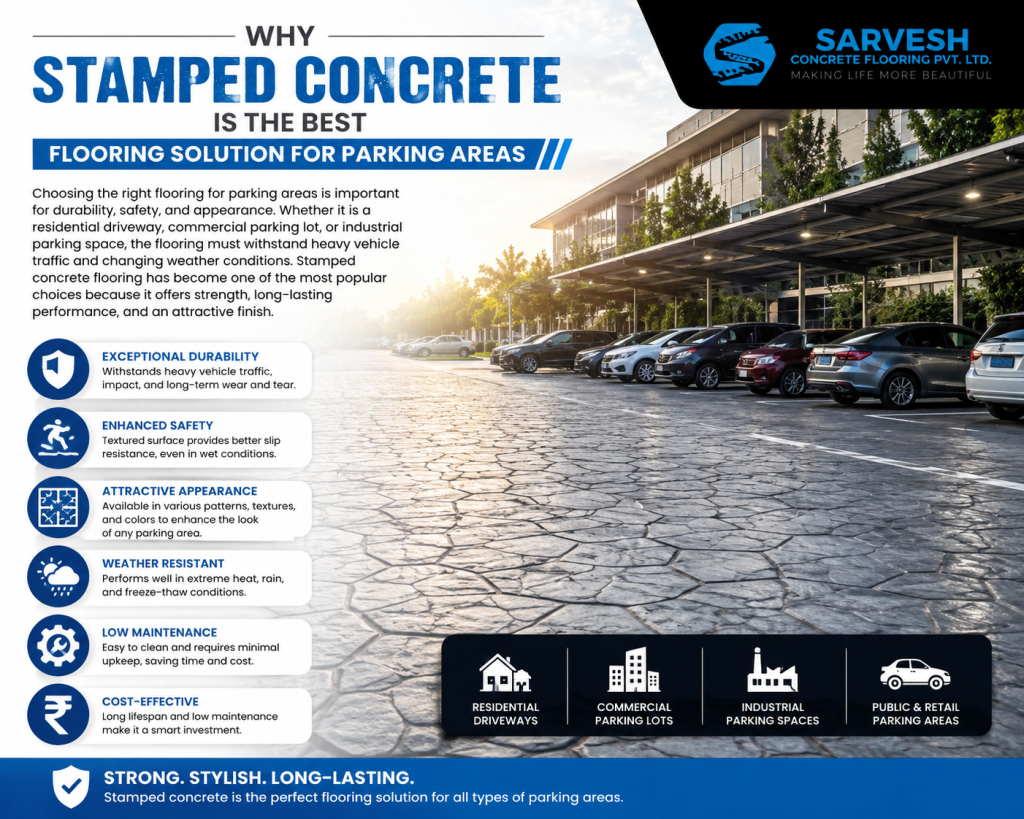
Internal roads and parking areas in housing societies are no longer used only by small cars. Every day, they handle fire tenders, garbage trucks, water tankers, delivery vehicles, and moving vans. Choosing the right flooring is critical—not just for appearance, but for strength, safety, and long-term cost control. So the big question is: Concrete or paver blocks—what actually stands up to heavy traffic?Let’s break it down. 1. Traffic Load Reality in Modern Societies Most societies underestimate the load their roads and parking areas carry. Typical heavy traffic includes: Fire tenders (high axle load) Garbage compactors and collection trucks Water tankers Furniture and moving trucks Continuous daily car movement These loads cause repeated stress, not just one-time impact. Flooring that cannot handle this stress starts failing early. 2. How Paver Blocks Perform Under Heavy Vehicles Paver blocks rely on: Sand bedding Edge restraints Interlocking friction Under light traffic, this system works. Under heavy and repeated loads, problems begin. Common paver failures: Blocks sink under tyre pressure Wheel ruts form over time Blocks loosen at turning points Edges break near ramps and curves Once the base shifts, the entire surface becomes uneven, requiring frequent dismantling and relaying. 3. Concrete Flooring: Designed for Heavy Loads Concrete flooring is a rigid, monolithic structure designed to distribute loads evenly across the surface. Key strengths: High compressive strength Excellent load distribution No movement under wheel pressure Reinforcement options for added strength Properly designed concrete roads and parking areas can easily handle fire tenders and loaded trucks without deformation. 4. Wear & Tear Comparison Over Time Pavers: Surface wear due to tyre friction Sand loss from joints Broken edges at turning points Colour fading and uneven appearance Concrete: Uniform wear across surface No joint sand loss High abrasion resistance Consistent appearance over years Concrete flooring ages far more gracefully and predictably than pavers. 5. Maintenance Impact on Society Operations Frequent paver repairs cause: Blocked driveways Parking disruptions Noise and dust Resident complaints Concrete flooring requires: Minimal maintenance No periodic realignment Only occasional surface repairs after many years This makes concrete ideal for societies that want peace of mind and smooth daily operations. 6. Safety & Emergency Readiness In emergency situations, flooring failure is not an option. Paver-related risks: Loose blocks under emergency braking Uneven surfaces slowing fire vehicles Waterlogged areas during monsoons Concrete provides: Stable and predictable surface Better grip with anti-skid finishes Reliable access for emergency vehicles For society safety planning, concrete is a far more dependable choice. 7. Cost Over Life Cycle: The Real Comparison While pavers may have lower initial costs, repeated maintenance, repairs, and disruptions significantly increase their lifecycle cost. Concrete flooring: Higher initial investment Much lower maintenance cost Longer service life (20–30 years) Over time, concrete proves to be the more economical solution. Conclusion: Built for Real Traffic, Not Just Looks When it comes to society roads and parking areas exposed to heavy vehicles and daily wear, concrete flooring clearly outperforms paver blocks. It offers strength, stability, safety, and long-term savings—all critical for modern housing societies. For societies planning infrastructure that can truly handle real-world traffic, concrete flooring is the smart, future-ready choice.

Modern Society Infrastructure Upgrade: How Concrete Flooring Enhances Safety, Aesthetics & Property Value
Stamp Concrete Services

Modern Society Infrastructure Upgrade: How Concrete Flooring Enhances Safety, Aesthetics & Property Value

Today’s housing societies are no longer judged only by their buildings. Internal roads, parking areas, walkways, and common spaces play a major role in safety, appearance, and overall property value. As societies plan upgrades and redevelopment, one change is proving especially impactful—shifting from paver blocks to concrete flooring. Concrete flooring is not just a functional improvement; it’s a smart infrastructure upgrade. 1. Enhanced Safety for Residents and Vehicles Safety is the top priority for any housing society. Uneven or loose flooring is a common cause of accidents, especially for senior citizens, children, and two-wheeler users. Concrete flooring improves safety by offering: Level and uniform surface with no loose blocks Anti-skid finishes for ramps, parking areas, and entry points Better grip during monsoons and wet conditions Reduced chances of tripping and vehicle skidding A well-finished concrete floor creates a safer environment for both pedestrians and vehicles. 2. Clean, Modern & Premium Appearance First impressions matter. Flooring that is cracked, uneven, or weed-filled instantly makes a society look poorly maintained. Concrete flooring delivers: A clean and seamless look No weeds or grass growth between joints Uniform colour and finish Easy-to-clean surface Stamped or textured concrete can also be used to achieve aesthetic patterns without compromising strength, giving societies a premium and modern feel. 3. Better Road Markings & Parking Demarcation Clear markings are essential for organized parking and smooth traffic movement within society premises. Concrete flooring allows: Long-lasting parking lines and directional arrows Clear fire tender and emergency access markings Better visibility at night and during rains Unlike pavers, where markings fade unevenly, concrete provides a stable base for durable paint and coatings. 4. Excellent Skid Resistance & Weather Performance In cities like Mumbai, heavy rains are a reality. Flooring must perform reliably during monsoons. Concrete floors can be designed with: Anti-skid textures Proper slopes for quick water drainage Abrasion-resistant finishes This ensures safe movement even during wet conditions and reduces complaints related to slipperiness and waterlogging. 5. Increased Property & Resale Value Infrastructure quality directly influences property value. Buyers and tenants prefer societies that are: Well-maintained Safe and clean Low on future repair costs Concrete flooring signals: Strong long-term planning Reduced maintenance expenses Modern and premium infrastructure This positively impacts resale value, rental demand, and overall society reputation. 6. Low Maintenance, Long-Term Savings Concrete flooring is not just about looks—it’s about practicality. Key advantages: Minimal routine maintenance No periodic realignment or block replacement Long service life of 20–30 years For managing committees, this means fewer complaints, lower annual expenses, and smoother operations. Conclusion: Upgrade That Pays Back Concrete flooring is one of the most effective infrastructure upgrades a housing society can make. It enhances safety, aesthetics, functionality, and property value—all while reducing long-term maintenance headaches. For societies looking to modernize their premises and create a safer, more valuable living environment, concrete flooring is a future-ready solution. Frequently Asked Questions Why should our society switch to concrete flooring? Concrete flooring is safe, strong, and looks modern. Unlike paver blocks, it stays even, doesn’t let weeds grow, and lasts much longer, making your society look neat and well-maintained. How does concrete flooring make the society safer? It gives a smooth, level surface with anti-skid finishes, reducing the risk of slips and trips. Proper drainage prevents waterlogging, so walking or driving is safer—even during heavy rains. Will concrete flooring improve the look of our roads and walkways? Yes! Concrete gives a clean, seamless appearance. You can even use stamped or textured designs to make the flooring look stylish while staying strong and durable. Can we mark parking spots and driveways clearly on concrete? Definitely. Concrete provides a solid base for long-lasting paint, so parking lines, directional arrows, and emergency access signs stay clear, even after rain or heavy traffic. How much maintenance does concrete flooring need? Very little! No block replacements, no frequent repairs—just routine cleaning. A properly installed concrete floor can last 20–30 years, saving money and effort.

Trimix Flooring Services

Paver Problems in Societies: How Concrete Flooring Solves Maintenance, Safety & Drainage Issues

Paver blocks have been widely used in housing societies for internal roads, walkways, and parking areas. While they may look attractive initially, many societies soon start facing serious maintenance, safety, and drainage issues. Over time, these problems not only increase costs but also create inconvenience and risk for residents. Let’s look at the most common paver-related problems in societies—and how concrete flooring offers a permanent and practical solution. 1. Uneven Pavers: A Daily Inconvenience One of the most common issues in society premises is uneven paver blocks. Due to constant vehicle movement, soil settlement, and poor base compaction, pavers tend to shift and sink. Problems caused by uneven pavers: Difficulty for senior citizens and children while walking Two-wheelers losing balance Stagnant water collecting in low spots Unsightly and unprofessional appearance Concrete flooring, being a single monolithic surface, remains level and stable for years without shifting or deformation. 2. Settlement & Sinking Due to Weak Sub-Base Pavers depend heavily on the quality of the sand bed and sub-base. In many societies, especially older ones, the base weakens over time due to: Soil movement Heavy vehicle loads Underground services and repairs As a result, pavers start sinking, requiring repeated dismantling and relaying. Concrete flooring eliminates this issue by: Distributing load evenly Providing high structural strength Resisting settlement even under heavy traffic This makes concrete ideal for society roads, ramps, and parking areas. 3. Waterlogging & Poor Drainage During Monsoons Water seepage is a major problem with paver blocks, especially during Indian monsoons. Water enters through joints, washes away the sand base, and weakens the flooring over time. Common drainage-related issues with pavers: Waterlogging after rainfall Mosquito breeding Slippery surfaces Faster deterioration of blocks Concrete flooring allows for proper slope design and controlled drainage, ensuring: Quick water runoff No seepage below the surface Better performance during heavy rains 4. Trip Hazards & Safety Concerns Loose and uneven pavers are a serious safety hazard. Many societies report: Residents tripping and falling Injuries due to uneven edges Increased risk during night or rainy conditions Concrete flooring provides: Smooth, continuous surface Anti-skid finishes where required Clear visibility and markings This significantly improves safety for pedestrians, cyclists, and vehicles. 5. High Maintenance & Repeated Repair Costs Paver flooring demands continuous attention: Periodic re-levelling Replacement of broken blocks Weed removal from joints Labour-intensive repairs These frequent interventions increase the overall maintenance budget of the society. Concrete flooring requires: Minimal routine maintenance No realignment or joint filling Long-term durability 6. Concrete Flooring: A Long-Term, Hassle-Free Solution Concrete flooring solves most problems associated with pavers by offering: Structural strength Long life (20–30 years) Better drainage and safety Clean and modern appearance It is especially suitable for: Internal roads Podium and stilt parking Walkways and ramps Entry and driveway areas Conclusion: Upgrade Smartly, Choose Concrete While paver blocks may seem convenient initially, their long-term performance often fails to meet the expectations of housing societies. Uneven surfaces, waterlogging, safety risks, and constant maintenance make them an expensive and troublesome option. Concrete flooring offers a durable, safe, and cost-effective alternative, making it the smart choice for societies looking for long-term peace of mind. Frequently Asked Questions Why do paver blocks become uneven after a few years? Paver blocks sit on a sand base. With regular vehicle movement, rainfall, and soil settling, this base slowly weakens. As a result, the blocks start moving, sinking, or coming loose. Is concrete flooring really better than paver blocks? Yes. Concrete is laid as one solid surface, so it doesn’t move or sink like pavers. That’s why it works much better for society roads, parking areas, and driveways. Is concrete flooring safe for elderly people and children? Yes. Concrete provides a flat and even surface with no loose blocks or sharp edges. Anti-skid finishes can also be added, making walking much safer for seniors and kids. Can concrete handle heavy vehicles inside the society? Yes. Concrete is strong enough to handle fire engines, moving trucks, and other heavy vehicles without damage. Can we replace existing paver blocks with concrete? Yes. Many societies remove old paver blocks and replace them with concrete during renovation or repair work.

Why Concrete Flooring Is a Smarter Long-Term Investment Than Paver Blocks for Housing Societies
Stamp Concrete Services

Why Concrete Flooring Is a Smarter Long-Term Investment Than Paver Blocks for Housing Societies

Housing societies today face a common challenge—choosing flooring that is durable, economical, and low-maintenance for internal roads, walkways, driveways, and parking areas. For years, paver blocks have been the go-to option. However, many societies are now realizing that concrete flooring is a far smarter long-term investment. Let’s understand why shifting from pavers to concrete flooring makes financial and practical sense. 1. The Hidden Cost of Paver Blocks At first glance, paver blocks appear economical. The initial installation cost is usually lower, which is why many societies opt for them. However, the real expense shows up over time. Common issues with pavers include: Settlement and sinking due to poor sub-base or soil movement Pavers becoming loose under constant vehicle movement Frequent realignment and replacement Weed growth and sand loss between joints These recurring repairs add up year after year, increasing the lifetime cost far beyond the original budget. 2. Concrete Flooring: One-Time Investment, Long-Term Benefit Concrete flooring, when executed properly, is a one-time solution. A well-designed concrete floor can easily last 20–30 years with minimal maintenance. Key advantages: No settlement or displacement High load-bearing capacity Uniform surface with no joint movement Excellent resistance to heavy vehicles For societies with regular car movement, fire tenders, garbage trucks, and delivery vehicles, concrete flooring performs far better than pavers. 3. Lower Maintenance = Major Cost Savings One of the biggest reasons societies shift to concrete is maintenance savings. With pavers: Annual maintenance contracts are common Sections need frequent dismantling and relaying Labour and material costs keep rising With concrete flooring: Maintenance is limited to simple cleaning No recurring realignment work Minor surface repairs only after many years Over a 10–15 year period, concrete flooring often turns out to be 30–40% more economical than pavers. 4. Better Performance in Indian Weather Conditions Indian cities like Mumbai experience heavy monsoons, high humidity, and temperature variations. Paver blocks are highly affected by these conditions due to water seepage and base erosion. Concrete flooring offers: Better drainage design options Monolithic structure that resists water damage No growth of grass or weeds Stable performance during monsoon seasons This makes concrete flooring especially suitable for basements, podiums, internal roads, and open parking areas. 5. Improved Safety and Clean Appearance Uneven pavers are a common cause of: Tripping hazards for residents Two-wheeler skidding Water stagnation and slippery surfaces Concrete flooring provides: Smooth and even surface Anti-skid finishes where required Clear road markings and parking demarcation Clean, modern, and professional look A well-maintained concrete floor significantly enhances the overall appearance and safety of the society. 6. Higher Property Value & Better Society Image Infrastructure quality directly impacts property value. Societies with strong, clean, and durable concrete flooring create a better impression on visitors, tenants, and prospective buyers. Benefits include: Improved resale and rental value Reduced complaints from residents Lower long-term society expenses Modern infrastructure appeal Concrete flooring is not just a functional choice—it’s a smart upgrade. Conclusion: Think Long-Term, Choose Concrete While paver blocks may seem economical initially, their recurring maintenance and frequent failures make them expensive in the long run. Concrete flooring, on the other hand, offers strength, durability, safety, and cost efficiency over decades. For housing societies planning long-term infrastructure with minimum headaches, concrete flooring is the clear winner. Frequently Asked Questions Which is better for society roads – concrete flooring or paver blocks? Concrete flooring is better for society roads because it is stronger, does not sink or loosen, and requires far less maintenance compared to paver blocks. Is concrete flooring really cheaper than paver blocks in the long run? Yes. Although paver blocks cost less initially, concrete flooring becomes much cheaper over time due to no recurring repairs, no relaying costs, and lower maintenance. Is concrete flooring suitable for car parking and driveways? Yes, concrete flooring is ideal for car parking areas, driveways, ramps, and internal roads because it handles constant vehicle load without damage. Is concrete flooring good for basements and podium parking? Yes, concrete flooring is highly recommended for basements and podiums because it is strong, water-resistant, and long-lasting. Does concrete flooring increase property value in housing societies? Yes. Clean, durable concrete flooring improves the overall look and infrastructure quality, which positively impacts property value.

Epoxy Flooring for Car Parking
Trimix Flooring Services

Top 5 Problems in Parking Areas & How the Right Flooring Solves Them

By Sarvesh Concrete Floors — Experts in Parking, Podium & Industrial Flooring for 26+ Years Parking areas are among the most used and abused parts of any high-rise project. From constant traffic to weather exposure, these surfaces undergo heavy wear every single day. Over the years, Sarvesh Concrete Floors Pvt. Ltd. has worked on thousands of parking floors across Mumbai, and we consistently see the same common problems in poorly executed parking surfaces. The Good News? With the right flooring system, all these issues can be prevented or permanently solved.Here are the top 5 problems in parking areas—and how our flooring solutions address them. 1. Cracks on the Parking Surface The Problem: Cracks occur due to thermal movement, slab shrinkage, poor finishing, or heavy vehicle load. They not only look bad but also allow water to seep through, leading to structural damage. Sarvesh Solution: Epoxy Coating for basements & stilts PU Coating for podiums & open-to-sky areas Crack-bridging PU membranes for slab movement zones Proper surface preparation & repair mortars Our systems provide flexibility and strength to prevent future cracking and protect the slab from movement-related damage. 2. Water Leakage & Seepage The Problem: Podiums and open parking areas often face rainwater penetration that leads to: Damp ceilings in lower floors Peeling paint Rusting reinforcement Long-term structural issues Sarvesh Solution: PU-based waterproofing coatings UV-resistant, weatherproof systems Seamless application for zero water entry Proper slope and drainage planning Our PU coating systems are specially designed for Mumbai’s monsoon and humidity, ensuring long-term waterproofing. 3. Dusting & Surface Erosion The Problem: Podiums and open parking areas often face rainwater penetration that leads to: Damp ceilings in lower floors Peeling paint Rusting reinforcement Long-term structural issues Sarvesh Solution: PU-based waterproofing coatings UV-resistant, weatherproof systems Seamless application for zero water entry Proper slope and drainage planning Our PU coating systems are specially designed for Mumbai’s monsoon and humidity, ensuring long-term waterproofing. 4. Frequent Maintenance & High Repair Cost The Problem: Parking floors deteriorate fast because of: Tyre friction Oil spills Water exposure Heat from vehicles Heavy traffic This leads to recurring maintenance, causing inconvenience to residents and increasing costs for developers. Sarvesh Solution: Heavy-duty Epoxy systems for indoor areas PU Coatings for podiums and exposed zones Chemical-resistant, skid-resistant coatings Long-lasting markings and driveways Our systems significantly reduce re-coating frequency and maintenance requirements, making parking areas look new for years. 5. Poor Aesthetics & Low Visibility The Problem: Parking areas that look dull, patchy, or damaged leave a negative impression on buyers and visitors. Poor visibility due to dark or worn-out floors also leads to safety issues. Sarvesh Solution: Bright, clean, glossy coatings Custom markings, arrows, and safety lines Anti-skid texture on ramps Colour-coded zones for better navigation A well-finished parking floor improves safety, makes navigation easier, and enhances the premium feel of the entire building. Why Choose Sarvesh Concrete Floors? With over 26+ years of experience, Sarvesh Concrete Floors has completed lakhs of sq ft of parking flooring across Mumbai’s top developers. We offer: The right flooring system for each area (basement, podium, ramp) Long-lasting solutions tailored for Mumbai weather Skilled in-house execution team Modern machinery & strict preparation methods Zero-failure, durable, cost-effective systems Our expertise ensures that the common parking problems never return and that your project maintains premium quality for years. Conclusion and proper execution, every major issue can be solved. From cracks to water leakage and dusting to safety, the correct solution enhances durability, aesthetics, and user satisfaction. With Sarvesh Concrete Floors, your parking area becomes:Stronger. Cleaner. Safer. More durable. And maintenance-free.

Trimix Flooring Services

How a Good Flooring System Increases Property Value in High-Rise Projects

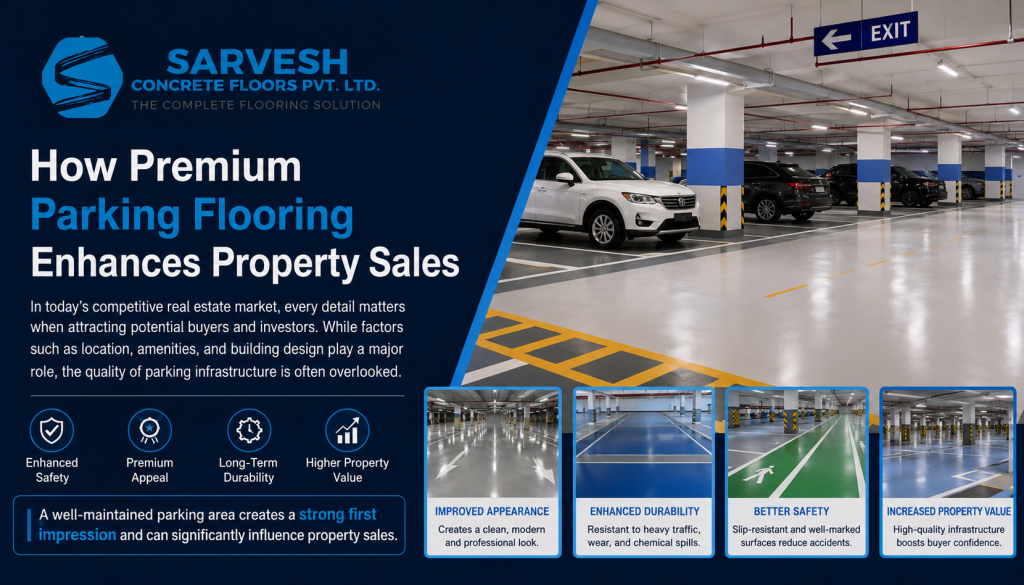
By Sarvesh Concrete Floors — Trusted Experts in Parking, Podium & Industrial Flooring for 26+ Years In modern high-rise developments, flooring is no longer just a “finishing item.” It plays a major role in building durability, aesthetics, user comfort, long-term maintenance cost, and overall property valuation. Over the last 26+ years, Sarvesh Concrete Floors Pvt. Ltd. has worked with Mumbai’s leading developers, and we have seen one clear pattern: Projects with high-quality flooring systems always hold better value, face fewer complaints, and deliver a premium experience to buyers. Here’s how a strong flooring system directly enhances property value in high-rise structures. 1. Increases Structural Strength & Service Life A good flooring system protects the main concrete slab from: Surface cracks Moisture penetration Dusting and wear Chemical exposure in parking areas Heavy vehicle load on podiums When these issues are prevented, the structural life of the building increases significantly. For developers, this means: Lower long-term repair cost Lower long-term repair cost Better durability ratings Higher valuation for the entire project Sarvesh Concrete Floors specializes in solutions like VDF/Trimix flooring, Screed, Epoxy, PU Coatings, Self-leveling, and Floor Hardeners, all engineered to extend the life of the structure. 2. Creates a Strong First Impression for Buyers In a high-rise project, buyers experience the flooring long before they see the actual flat.They walk through: Basements Podiums Driveways Lobbies Parking areas A clean, smooth, crack-free, well-coated floor immediately signals that the developer has invested in quality. Premium flooring helps buyers feel they are entering a safe, high-value, well-built property. This is why many prestigious projects—like Monte South, Raheja Imperia, Raheja Legend, and Marathon Futurex—trust Sarvesh Concrete Floors for parking, podium, and driveway flooring. 3. Reduces Maintenance & Complaint Costs Developers often face recurring issues when low-quality flooring is used: Peeling coatings Cracks Dusting surfaces Water ponding Hot tyre pick-up Colour fading on podiums These problems lead to complaints, reputational damage, and expensive rework. With Sarvesh Concrete Floors’ high-performance systems, developers benefit from: Longer floor life Minimal maintenance Reduced re-coating frequency Increased resident satisfaction Lower maintenance = stronger long-term value. 4. Enhances Safety & Functionality Safety is one of the biggest contributors to property value.Good flooring ensures: Proper anti-skid finish on ramps Smooth vehicle movement Better visibility in basements through bright coatings Protection against slips and falls Clear and durable marking lines for parking management Sarvesh’s Epoxy and PU systems are designed with safe, functional movement in mind—making the building more user-friendly. 5. Improves Aesthetic Appeal & Market Positioning A premium flooring system can transform the overall look of: Podium decks Walkways Parking levels Lobbies Service areas Aesthetic flooring increases the perceived value of the project.When buyers see clean, glossy, well-marked surfaces, it boosts the developer’s brand and helps justify premium pricing. Good flooring = better presentation = better market value. 6. Ensures Better Longevity in Parking & Podium Areas Parking areas face the harshest conditions: Tyre friction Oil leaks Weather exposure Constant vehicle movement Using the right coating makes a huge difference.Sarvesh recommends: Epoxy Flooring for basements & stilts PU Coating for podiums & open-to-sky areas These systems prevent surface damage, stop water seepage, resist UV rays, and keep the floors looking new for years—adding measurable long-term value to the property. 7. Boosts Developer Reputation & Saleability A developer known for strong flooring quality enjoys: Faster bookings Higher customer trust Better resale demand Strong referral busines Repeat buyers for future projects Sarvesh Concrete Floors has contributed to this trust by delivering on-time, long-lasting, zero-failure flooring solutions across Mumbai’s most demanding projects. Good flooring is a silent foundation of a premium real estate brand. Conclusion A well-designed flooring system is one of the most effective ways to increase the value, durability, and market appeal of a high-rise project. It improves structural performance, reduces maintenance, enhances aesthetics, and significantly boosts buyer confidence. With 26+ years of experience and millions of sq ft completed, Sarvesh Concrete Floors ensures every project receives the right flooring solution—built for performance, longevity, and premium value.

Trimix Flooring Services

Epoxy vs. PU Coating: Which is Best for Your Car Parking?

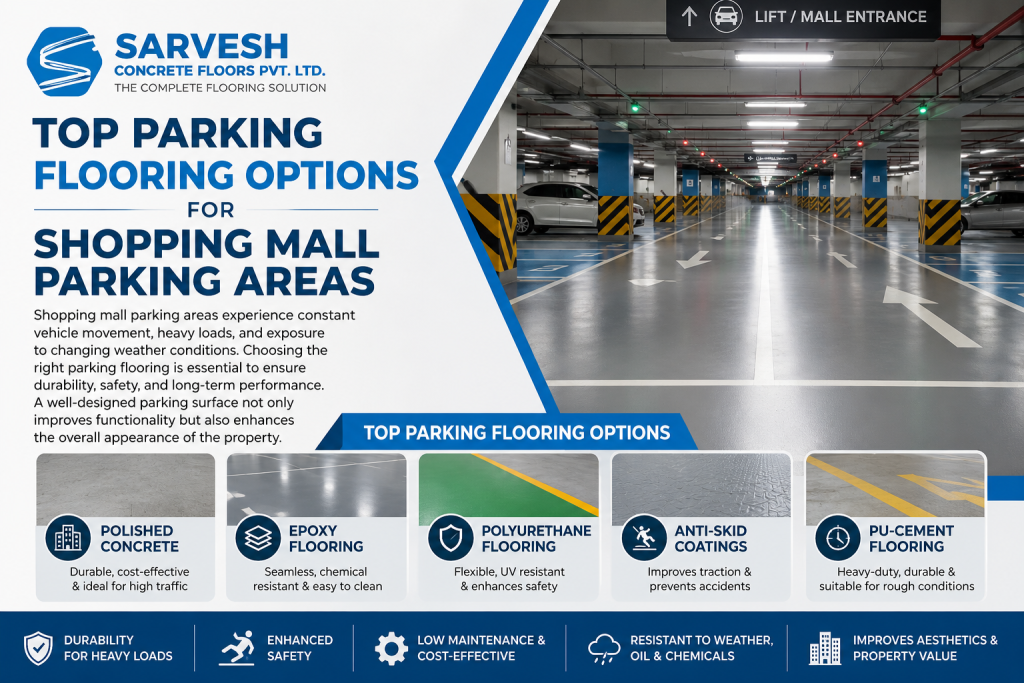
A Clear Guide by Sarvesh Concrete Floors – Mumbai’s Trusted Flooring Experts For over 26 years, Sarvesh Concrete Floors Pvt. Ltd. has been delivering high-performance flooring solutions across Mumbai’s leading real estate, industrial, commercial, and infrastructure projects. Among all the systems we install, Epoxy and PU Coatings remain the most preferred choices for car parking areas. But which one is right for your podium, stilt, or basement parking? This guide will help clients, architects, and developers understand the difference—based on our practical onsite experience, not theory. Why Car Parking Coating Matters Car parking floors face some of the harshest conditions: Constant tyre movement Oil, fuel & chemical spills Skid marks and abrasion Heavy vehicle load Rainwater exposure (in podiums & open areas) Hot tyre pick-up A poor coating leads to rapid wear, safety issues, and increased maintenance cost. At Sarvesh Concrete Floors, we specialize in long-lasting, cost-effective coating systems designed specifically for Mumbai’s climate and parking usage. Epoxy Coating – The Sarvesh Preferred Solution for Basements & Stilts Epoxy Coating is one of our most installed systems across: Basement parkings Stilt parking levels Internal ramps Driveways protected from sunlight Why We Recommend Epoxy: High strength: Creates a hard, rigid, long-lasting surface. Excellent abrasion resistance: Ideal for high tyre movement areas. Chemical & oil resistance: Protects concrete from stains and damage. Economical: Best performance at the most cost-effective price. Smooth, aesthetic finish: Enhances basement visibility and safety. Where Sarvesh Has Used Epoxy Successfully: Monte South (Byculla) – 6,00,000 sq ft Raheja Imperia (Lower Parel) – 3,00,000 sq ft Raheja Legend (Worli) – 2,00,000 sq ft Marathon Futurex (Lower Parel) – 8,00,000 sq ft We have executed multiple basements & stilts using heavy-duty epoxy with outstanding performance over the years. PU Coating – The Sarvesh Solution for Podiums & Open-to-Sky Parkings PU (Polyurethane) Coatings are recommended by our team for: Podiums Open-to-sky driveways Semi-open parking zones Areas exposed to sunlight, rain, or movement Why We Recommend PU: Superior flexibility: Handles slab micro-movements without cracking. UV resistant: Does not fade or yellow under sunlight. Weather proof: Performs excellently in Mumbai’s monsoon and humidity. Crack-bridging ability: Ideal for podium slabs with temperature variation. Long-term colour stability: Keeps parking looking new for years. Where Sarvesh Has Used PU Coating: From high-rise podiums to commercial car parks, our PU systems perform exceptionally in open environments where epoxy cannot. Epoxy vs PU – Sarvesh Concrete Floors’ Technical Comparison Feature Epoxy Coating PU Coating Flexibility Low (Rigid) High (Elastic) UV Resistance Low Excellent Abrasion Resistance Excellent Very Good Chemical Resistance High Moderate–High Movement Handling Limited Strong crack-bridging Best Use Area Basement, Stilt Podium, Outdoor Parking Cost Economical Premium What We Recommend to Our Clients Based on our 26+ years of experience across Mumbai’s major parking projects: ✔ Basement / Stilt Parking High-build Epoxy CoatingBest for indoor areas where strength, smooth finish, and affordability are key. ✔ Podium / Open-to-Sky Parking PU Coating SystemIdeal for areas exposed to sunlight, rain, and temperature fluctuations. ✔ For Maximum Durability Hybrid System (Epoxy Base + PU Top Coat)We often recommend this for high-end podiums to combine strength + UV stability. Why Choose Sarvesh Concrete Floors for Parking Coatings? ✔ 26 years of industry expertise ✔ Over 20+ lakh sq ft of parking flooring completed ✔ In-house trained workforce ✔ Latest equipment & technology ✔ Fast project execution ✔ One-stop flooring partner for developers & architects From preparation to coating, we follow a strict quality method to ensure zero failures and long-term performance. Final Thought Both Epoxy and PU are excellent systems—but the right choice depends entirely on where your parking is located. With Sarvesh Concrete Floors’ experience and technical understanding, we ensure you always get the right coating for the right area, giving long-term durability and value.

Scroll to Top