
What's Really at Stake When Floors Aren't Waterproofed
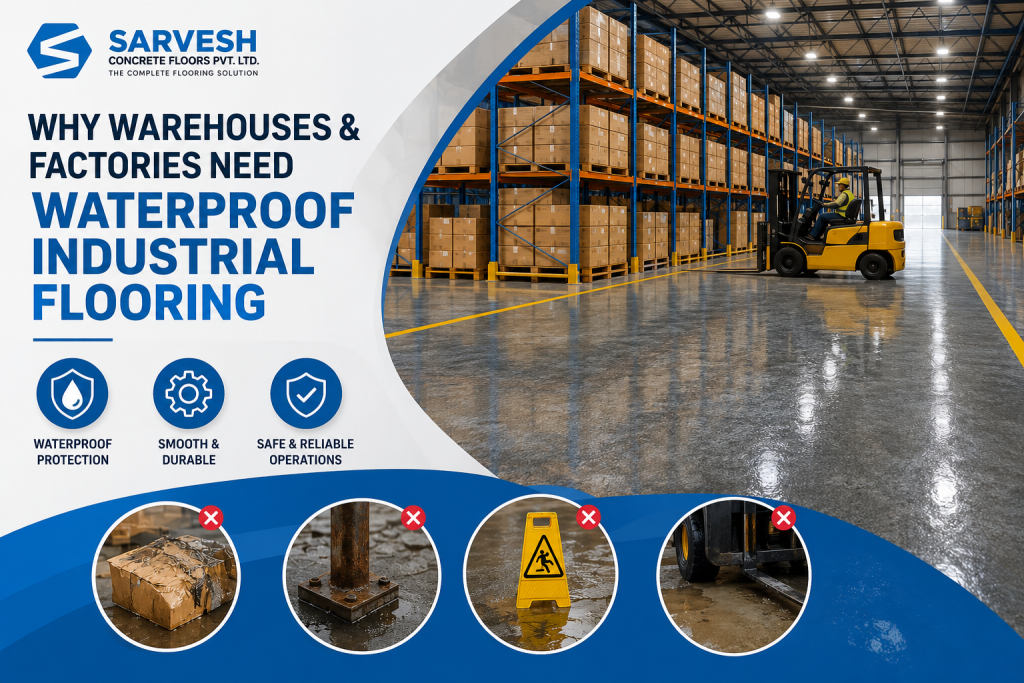
For most factories and warehouses, the floor isn’t just a surface it’s where inventory sits, where machinery operates, and where workers and vehicles move all day. When water gets in, the damage isn’t limited to the floor itself.
Moisture-sensitive inventory (paper products, packaging, textiles, electronics) can be ruined within hours of exposure. Metal shelving, machine bases, and equipment legs are prone to rusting when floors stay damp. And wet concrete becomes dangerously slippery for forklifts and foot traffic, increasing the risk of workplace accidents a serious liability concern for any facility manager.
Common Scenarios Where This Goes Wrong
Loading dock areas are especially vulnerable since they’re directly exposed to open bays where rain blows in during monsoon. Many warehouses in industrial belts like Bhiwandi, Taloja, and Navi Mumbai also sit on land with high groundwater tables, meaning even ground-floor slabs can experience seepage from below.
Older factory buildings that were constructed before waterproofing became a standard part of industrial construction often rely on basic RCC flooring with no additional protective layer — these are the floors most likely to develop cracks, dust, and water damage over just a few monsoon cycles.
What a Properly Built Monsoon-Ready Floor Looks Like
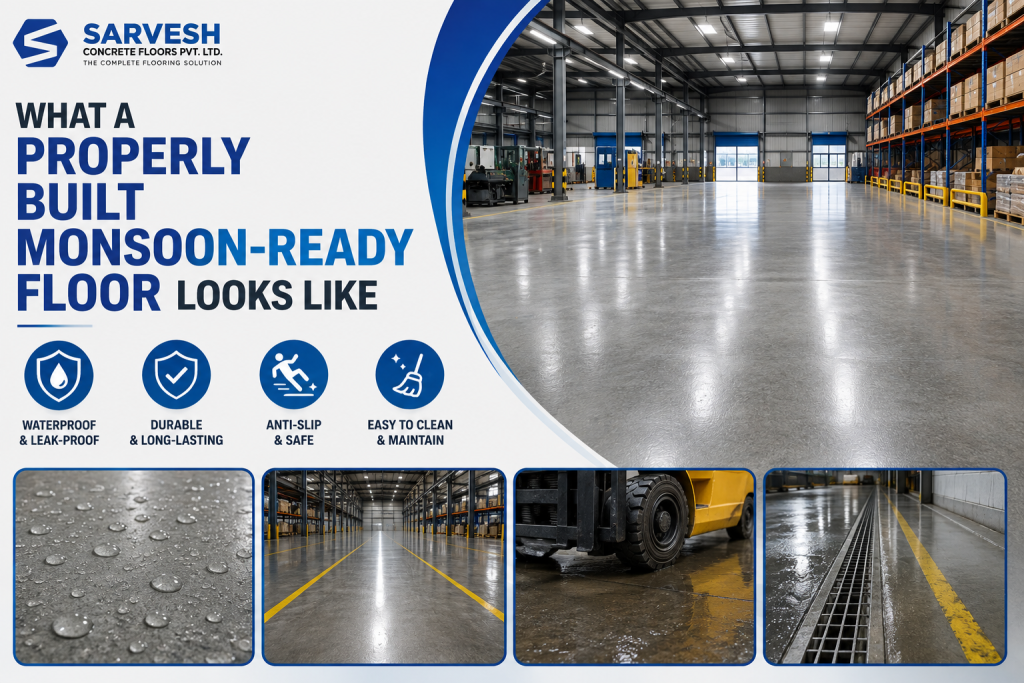
A well-designed industrial floor for Mumbai’s climate typically starts with a strong base like Vacuum Dewatered Flooring (VDF), which is denser and less porous than standard concrete. On top of this, a waterproof epoxy or PU coating seals the surface completely, making it resistant to water, oil, and chemical spills common in industrial settings.
Just as critical is the drainage design proper slope gradients and channel drains built into the floor plan ensure water is directed away from storage and work areas instead of pooling.
The Business Case: Why This Isn't Just a Maintenance Expense
Business owners sometimes view flooring upgrades as a cosmetic or optional expense, but for warehouses and factories, it directly affects three things that matter to the bottom line: inventory protection, worker safety compliance, and operational uptime.
A single incident of water damage to stored goods, or a workplace injury from a slippery floor, often costs significantly more than the price of proper waterproof flooring not to mention potential insurance and liability complications.
Frequently Asked Questions
Yes, in most cases work can be phased section-by-section to minimize disruption to ongoing operations.
For heavy machinery or vehicle traffic, VDF as a base plus a waterproof topcoat gives the best long-term durability. For lighter-use spaces, a strong waterproof coating on existing concrete can suffice.
With proper installation and maintenance, it commonly lasts 8-15 years depending on usage intensity and exposure conditions.
Ready to Get Started?
Talk to Sarvesh Concrete Floors about a waterproof flooring solution designed for your warehouse or factory’s specific operational needs.