Stamp Concrete Services

Stamp Concrete Services

Concrete vs Pavers in Society Roads & Parking: Which One Truly Handles Heavy Traffic?

Internal roads and parking areas in housing societies are no longer used only by small cars. Every day, they handle fire tenders, garbage trucks, water tankers, delivery vehicles, and moving vans. Choosing the right flooring is critical—not just for appearance, but for strength, safety, and long-term cost control. So the big question is: Concrete or paver blocks—what actually stands up to heavy traffic?Let’s break it down. 1. Traffic Load Reality in Modern Societies Most societies underestimate the load their roads and parking areas carry. Typical heavy traffic includes: Fire tenders (high axle load) Garbage compactors and collection trucks Water tankers Furniture and moving trucks Continuous daily car movement These loads cause repeated stress, not just one-time impact. Flooring that cannot handle this stress starts failing early. 2. How Paver Blocks Perform Under Heavy Vehicles Paver blocks rely on: Sand bedding Edge restraints Interlocking friction Under light traffic, this system works. Under heavy and repeated loads, problems begin. Common paver failures: Blocks sink under tyre pressure Wheel ruts form over time Blocks loosen at turning points Edges break near ramps and curves Once the base shifts, the entire surface becomes uneven, requiring frequent dismantling and relaying. 3. Concrete Flooring: Designed for Heavy Loads Concrete flooring is a rigid, monolithic structure designed to distribute loads evenly across the surface. Key strengths: High compressive strength Excellent load distribution No movement under wheel pressure Reinforcement options for added strength Properly designed concrete roads and parking areas can easily handle fire tenders and loaded trucks without deformation. 4. Wear & Tear Comparison Over Time Pavers: Surface wear due to tyre friction Sand loss from joints Broken edges at turning points Colour fading and uneven appearance Concrete: Uniform wear across surface No joint sand loss High abrasion resistance Consistent appearance over years Concrete flooring ages far more gracefully and predictably than pavers. 5. Maintenance Impact on Society Operations Frequent paver repairs cause: Blocked driveways Parking disruptions Noise and dust Resident complaints Concrete flooring requires: Minimal maintenance No periodic realignment Only occasional surface repairs after many years This makes concrete ideal for societies that want peace of mind and smooth daily operations. 6. Safety & Emergency Readiness In emergency situations, flooring failure is not an option. Paver-related risks: Loose blocks under emergency braking Uneven surfaces slowing fire vehicles Waterlogged areas during monsoons Concrete provides: Stable and predictable surface Better grip with anti-skid finishes Reliable access for emergency vehicles For society safety planning, concrete is a far more dependable choice. 7. Cost Over Life Cycle: The Real Comparison While pavers may have lower initial costs, repeated maintenance, repairs, and disruptions significantly increase their lifecycle cost. Concrete flooring: Higher initial investment Much lower maintenance cost Longer service life (20–30 years) Over time, concrete proves to be the more economical solution. Conclusion: Built for Real Traffic, Not Just Looks When it comes to society roads and parking areas exposed to heavy vehicles and daily wear, concrete flooring clearly outperforms paver blocks. It offers strength, stability, safety, and long-term savings—all critical for modern housing societies. For societies planning infrastructure that can truly handle real-world traffic, concrete flooring is the smart, future-ready choice.

Modern Society Infrastructure Upgrade: How Concrete Flooring Enhances Safety, Aesthetics & Property Value
Stamp Concrete Services

Modern Society Infrastructure Upgrade: How Concrete Flooring Enhances Safety, Aesthetics & Property Value

Today’s housing societies are no longer judged only by their buildings. Internal roads, parking areas, walkways, and common spaces play a major role in safety, appearance, and overall property value. As societies plan upgrades and redevelopment, one change is proving especially impactful—shifting from paver blocks to concrete flooring. Concrete flooring is not just a functional improvement; it’s a smart infrastructure upgrade. 1. Enhanced Safety for Residents and Vehicles Safety is the top priority for any housing society. Uneven or loose flooring is a common cause of accidents, especially for senior citizens, children, and two-wheeler users. Concrete flooring improves safety by offering: Level and uniform surface with no loose blocks Anti-skid finishes for ramps, parking areas, and entry points Better grip during monsoons and wet conditions Reduced chances of tripping and vehicle skidding A well-finished concrete floor creates a safer environment for both pedestrians and vehicles. 2. Clean, Modern & Premium Appearance First impressions matter. Flooring that is cracked, uneven, or weed-filled instantly makes a society look poorly maintained. Concrete flooring delivers: A clean and seamless look No weeds or grass growth between joints Uniform colour and finish Easy-to-clean surface Stamped or textured concrete can also be used to achieve aesthetic patterns without compromising strength, giving societies a premium and modern feel. 3. Better Road Markings & Parking Demarcation Clear markings are essential for organized parking and smooth traffic movement within society premises. Concrete flooring allows: Long-lasting parking lines and directional arrows Clear fire tender and emergency access markings Better visibility at night and during rains Unlike pavers, where markings fade unevenly, concrete provides a stable base for durable paint and coatings. 4. Excellent Skid Resistance & Weather Performance In cities like Mumbai, heavy rains are a reality. Flooring must perform reliably during monsoons. Concrete floors can be designed with: Anti-skid textures Proper slopes for quick water drainage Abrasion-resistant finishes This ensures safe movement even during wet conditions and reduces complaints related to slipperiness and waterlogging. 5. Increased Property & Resale Value Infrastructure quality directly influences property value. Buyers and tenants prefer societies that are: Well-maintained Safe and clean Low on future repair costs Concrete flooring signals: Strong long-term planning Reduced maintenance expenses Modern and premium infrastructure This positively impacts resale value, rental demand, and overall society reputation. 6. Low Maintenance, Long-Term Savings Concrete flooring is not just about looks—it’s about practicality. Key advantages: Minimal routine maintenance No periodic realignment or block replacement Long service life of 20–30 years For managing committees, this means fewer complaints, lower annual expenses, and smoother operations. Conclusion: Upgrade That Pays Back Concrete flooring is one of the most effective infrastructure upgrades a housing society can make. It enhances safety, aesthetics, functionality, and property value—all while reducing long-term maintenance headaches. For societies looking to modernize their premises and create a safer, more valuable living environment, concrete flooring is a future-ready solution. Frequently Asked Questions Why should our society switch to concrete flooring? Concrete flooring is safe, strong, and looks modern. Unlike paver blocks, it stays even, doesn’t let weeds grow, and lasts much longer, making your society look neat and well-maintained. How does concrete flooring make the society safer? It gives a smooth, level surface with anti-skid finishes, reducing the risk of slips and trips. Proper drainage prevents waterlogging, so walking or driving is safer—even during heavy rains. Will concrete flooring improve the look of our roads and walkways? Yes! Concrete gives a clean, seamless appearance. You can even use stamped or textured designs to make the flooring look stylish while staying strong and durable. Can we mark parking spots and driveways clearly on concrete? Definitely. Concrete provides a solid base for long-lasting paint, so parking lines, directional arrows, and emergency access signs stay clear, even after rain or heavy traffic. How much maintenance does concrete flooring need? Very little! No block replacements, no frequent repairs—just routine cleaning. A properly installed concrete floor can last 20–30 years, saving money and effort.

Why Concrete Flooring Is a Smarter Long-Term Investment Than Paver Blocks for Housing Societies
Stamp Concrete Services

Why Concrete Flooring Is a Smarter Long-Term Investment Than Paver Blocks for Housing Societies

Housing societies today face a common challenge—choosing flooring that is durable, economical, and low-maintenance for internal roads, walkways, driveways, and parking areas. For years, paver blocks have been the go-to option. However, many societies are now realizing that concrete flooring is a far smarter long-term investment. Let’s understand why shifting from pavers to concrete flooring makes financial and practical sense. 1. The Hidden Cost of Paver Blocks At first glance, paver blocks appear economical. The initial installation cost is usually lower, which is why many societies opt for them. However, the real expense shows up over time. Common issues with pavers include: Settlement and sinking due to poor sub-base or soil movement Pavers becoming loose under constant vehicle movement Frequent realignment and replacement Weed growth and sand loss between joints These recurring repairs add up year after year, increasing the lifetime cost far beyond the original budget. 2. Concrete Flooring: One-Time Investment, Long-Term Benefit Concrete flooring, when executed properly, is a one-time solution. A well-designed concrete floor can easily last 20–30 years with minimal maintenance. Key advantages: No settlement or displacement High load-bearing capacity Uniform surface with no joint movement Excellent resistance to heavy vehicles For societies with regular car movement, fire tenders, garbage trucks, and delivery vehicles, concrete flooring performs far better than pavers. 3. Lower Maintenance = Major Cost Savings One of the biggest reasons societies shift to concrete is maintenance savings. With pavers: Annual maintenance contracts are common Sections need frequent dismantling and relaying Labour and material costs keep rising With concrete flooring: Maintenance is limited to simple cleaning No recurring realignment work Minor surface repairs only after many years Over a 10–15 year period, concrete flooring often turns out to be 30–40% more economical than pavers. 4. Better Performance in Indian Weather Conditions Indian cities like Mumbai experience heavy monsoons, high humidity, and temperature variations. Paver blocks are highly affected by these conditions due to water seepage and base erosion. Concrete flooring offers: Better drainage design options Monolithic structure that resists water damage No growth of grass or weeds Stable performance during monsoon seasons This makes concrete flooring especially suitable for basements, podiums, internal roads, and open parking areas. 5. Improved Safety and Clean Appearance Uneven pavers are a common cause of: Tripping hazards for residents Two-wheeler skidding Water stagnation and slippery surfaces Concrete flooring provides: Smooth and even surface Anti-skid finishes where required Clear road markings and parking demarcation Clean, modern, and professional look A well-maintained concrete floor significantly enhances the overall appearance and safety of the society. 6. Higher Property Value & Better Society Image Infrastructure quality directly impacts property value. Societies with strong, clean, and durable concrete flooring create a better impression on visitors, tenants, and prospective buyers. Benefits include: Improved resale and rental value Reduced complaints from residents Lower long-term society expenses Modern infrastructure appeal Concrete flooring is not just a functional choice—it’s a smart upgrade. Conclusion: Think Long-Term, Choose Concrete While paver blocks may seem economical initially, their recurring maintenance and frequent failures make them expensive in the long run. Concrete flooring, on the other hand, offers strength, durability, safety, and cost efficiency over decades. For housing societies planning long-term infrastructure with minimum headaches, concrete flooring is the clear winner. Frequently Asked Questions Which is better for society roads – concrete flooring or paver blocks? Concrete flooring is better for society roads because it is stronger, does not sink or loosen, and requires far less maintenance compared to paver blocks. Is concrete flooring really cheaper than paver blocks in the long run? Yes. Although paver blocks cost less initially, concrete flooring becomes much cheaper over time due to no recurring repairs, no relaying costs, and lower maintenance. Is concrete flooring suitable for car parking and driveways? Yes, concrete flooring is ideal for car parking areas, driveways, ramps, and internal roads because it handles constant vehicle load without damage. Is concrete flooring good for basements and podium parking? Yes, concrete flooring is highly recommended for basements and podiums because it is strong, water-resistant, and long-lasting. Does concrete flooring increase property value in housing societies? Yes. Clean, durable concrete flooring improves the overall look and infrastructure quality, which positively impacts property value.

Stamp Concrete Services

Why Housing Societies Should Switch from Paver Blocks to Concrete Flooring

Housing societies across cities often face one common problem—damaged flooring in their premises. Whether it’s driveways, parking areas, or common open spaces, the choice of flooring plays a big role in maintenance cost, durability, and safety. For years, many societies have relied on paver blocks, but the reality is they come with heavy maintenance and recurring expenses. At Sarvesh Concrete Floors Pvt. Ltd., with over 27 years of expertise in concrete flooring, we have seen firsthand how switching to durable Concrete Flooring can save societies money, time, and effort. The Common Problems with Paver Blocks While paver blocks look neat in the beginning, they often become a burden over time: Uneven Surfaces & Settling IssuesPavers shift with vehicle movement and rainwater, creating uneven surfaces. This causes discomfort for residents and poses safety risks. High Maintenance CostsRegular re-levelling, filling of gaps, and replacing broken blocks is expensive and never a permanent solution. Weed & Grass GrowthGaps between pavers allow weeds to grow, making the premises look poorly maintained. Water LoggingPaver blocks trap water, leading to puddles and dampness—especially in parking areas and driveways. Why Concrete Flooring is a Better Choice for Societies Concrete flooring is a long-term, low-maintenance solution that perfectly suits residential societies. Here’s how it benefits you: Durability & StrengthConcrete flooring can easily withstand heavy vehicle movement without cracking or shifting. It’s designed for long life and heavy use. Low MaintenanceUnlike paver blocks, concrete doesn’t require frequent replacements or repairs. Simple cleaning and occasional coating keep it fresh for years. Cost-EffectiveThough the initial investment might be slightly higher than pavers, societies save huge amounts in the long run by avoiding regular repair costs. Smooth & Safe FinishA well-finished concrete surface is smooth, even, and free from gaps, making it safe for children, senior citizens, and vehicles. Better Drainage & HygieneWith proper finishing and slope, concrete flooring prevents waterlogging, reduces dampness, and ensures a cleaner environment. Real Value for Societies By replacing paver blocks with modern concrete flooring solutions, societies: Enhance the overall look of their premises. Reduce yearly maintenance bills. Provide safer, cleaner spaces for residents. Add long-term value to the property. Final Word Every society looks for solutions that are cost-effective, durable, and easy to maintain. Concrete flooring checks all the boxes while eliminating the recurring problems of paver blocks. At Sarvesh Concrete Floors Pvt. Ltd., we specialize in creating strong, reliable, and aesthetically finished floors that serve societies for decades. If your society is struggling with paver block issues, it may be the right time to upgrade to concrete flooring.

Stamp Concrete Services

What Are the Benefits of Stamped Concrete?

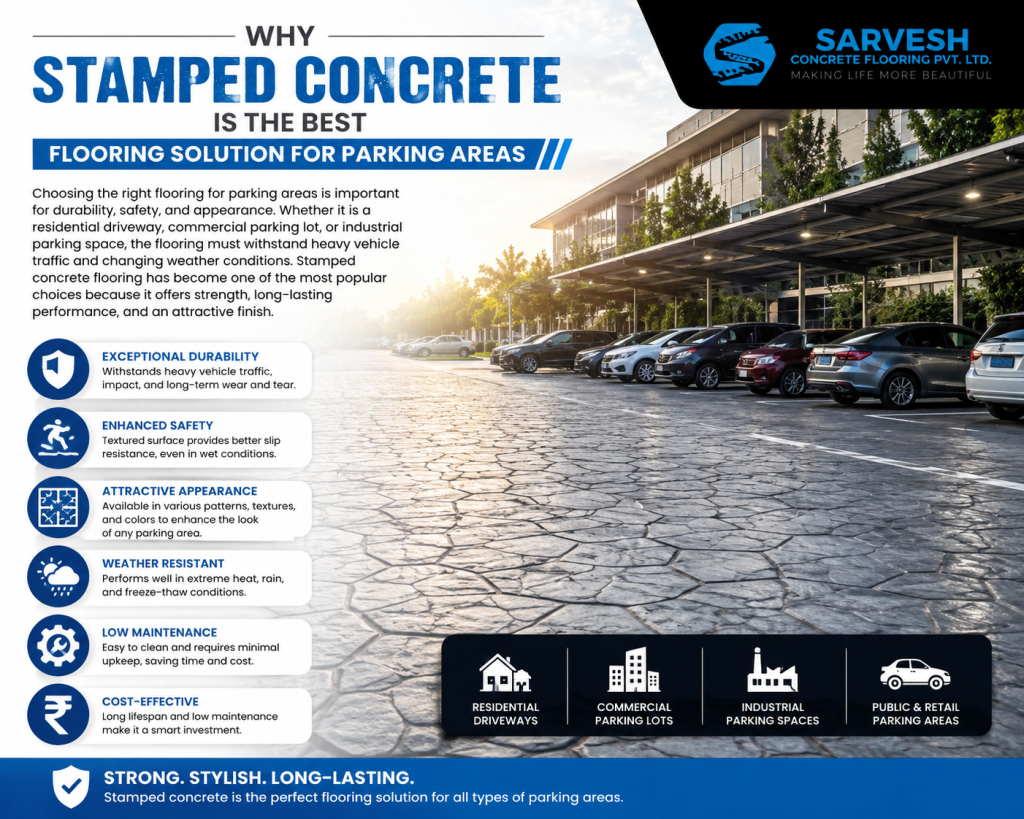
In outdoor home improvement projects, the traditional perception of concrete as cold and uninspired is rapidly evolving. Today, stamped concrete offers a versatile and aesthetically pleasing alternative that can mimic the appearance of natural materials like flagstone, slate, or brick.What Are the Benefits of Stamped Concrete ? This innovation not only enhances the visual appeal of driveways, patios, and other outdoor spaces but also brings significant advantages over conventional building materials. Beyond financial savings, it requires less maintenance, with periodic sealing being the primary upkeep, unlike the labor-intensive care required by alternatives like pavers or crushed stone. Concrete driveways and patios no longer have to be characterized by a cold and boring look. The colors, patterns, and textures in stamped concrete can be made to look like flagstone, slate, or brick. Its flexibility is what makes stamped concrete an attractive option to use for installing outdoor patios, walkways, stoops, driveways, and poolside areas. If you are considering stamped concrete for an outdoor home improvement project, knowing the advantages it offers over traditional concrete and other building materials may help to sway your decision. Cost Savings Although the cost of completing a project varies depending on the size of the area where you want to install stamped concrete, the cost of labor where you live, and local concrete prices, both you and your contractor can save money. It’s less expensive than materials such as brick, flagstone, and other natural stones that homeowners select for visual appeal, yet it looks just as attractive.Contractors can save money by pouring concrete instead of hauling in truckloads of bricks, stones, or concrete pavers that need to be placed individually by hand to fit them together. Since stamped concrete is laid as a continuous slab that doesn’t involve as much time or as many workers to get the job done, the project incurs fewer labor costs. Maintenance Stamped concrete requires less maintenance than brick, pavers, cobblestone, or even a crushed stone driveway. Sealing the surface of stamped concrete every couple of years helps protect the concrete from moisture and damage caused by weather elements.What Are the Benefits of Stamped Concrete?Many other building materials require more maintenance.While high-density stone resists cracking, weeds grow between the joints. In addition to weed problems, the edges of bricks are prone to chipping and may need to be replaced. Concrete pavers work loosely and shift over time, eventually resulting in a surface that needs to be completely re-leveled. Although crushed stone is usually a more economical option to start with, the stones scatter and must be re-leveled and replaced on a regular basis. Curb Appeal Stamped concrete gives the exterior of your home a distinctive and high-end appearance upgrade at a lower cost than traditional pavers. Your driveway, walkways, or patio will be among the first things people notice, especially if you select colors and textures that blend with your home’s landscaping design. By enhancing your property’s curb appeal, you add value to your home. Why Choose Stamped Concrete Stamped concrete is durable, affordable, and doesn’t require a lot of work to maintain. With stamped concrete, your completed project will look amazing for years to come. So why not have our professionals at Sarvesh Concrete Floors Pvt. Ltd   install some right away? Contact us today. Frequently Asked Questions What are the benefits of Trimix Flooring? Superior strength and durability Reduced water and cement consumption Faster construction time Smooth and even surface finish Resistance to abrasion and wear Where can floor self-leveling be used? Where can floor self-leveling be used? Floor self-leveling is suitable for a variety of applications, including: Residential spaces such as living rooms, kitchens, and basements. Commercial environments, including retail stores, offices, and showrooms. Industrial facilities and warehouses where flat and level surfaces are crucial for operations. How is stamped concrete installed? Preparation of the base and ensuring proper compaction. Pouring and leveling the concrete mix. Application of release agents and color hardeners to achieve desired colors and textures. Stamping with textured mats or tools to create patterns and textures. Curing and sealing to enhance durability and color retention. What is the installation process for industrial flooring? Surface preparation, including cleaning and possibly shot blasting or grinding to ensure proper adhesion. Application of the selected flooring system, which may include multiple layers depending on the specifications. Curing and drying time, followed by any necessary finishing touches or coatings.   What is the downtime for installing epoxy flooring? The downtime varies depending on the size of the area, the complexity of the installation, and environmental conditions. In many cases, epoxy flooring can be installed in stages to minimize disruption to operations.

Scroll to Top