
What Is VDF Flooring, in Plain Terms?
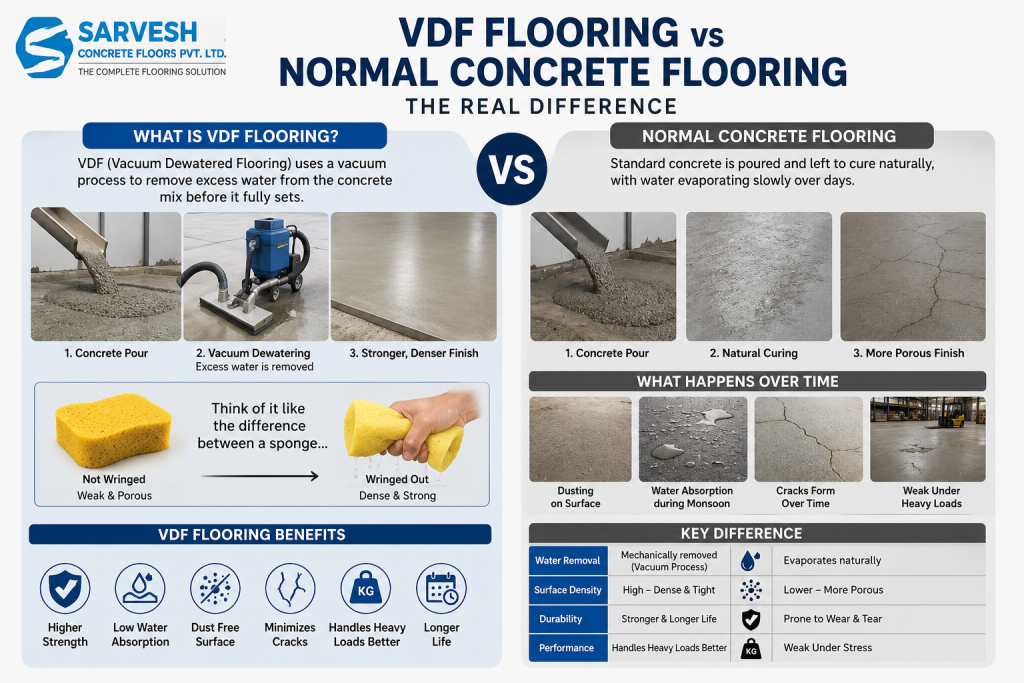
VDF stands for Vacuum Dewatered Flooring. During installation, once the wet concrete mix is poured, a vacuum process mechanically extracts excess water from it before the mix fully sets. This might sound like a small technical step, but it changes everything about how strong and durable the final floor is.
Think of it like the difference between air-drying a sponge naturally versus wringing it out removing that excess water early results in a much denser, tighter, and stronger final surface.
How Normal Concrete Flooring Compares
Standard concrete flooring is poured and left to cure naturally, with water evaporating slowly over days. This slower process, while cheaper and simpler, results in a more porous surface with small air pockets and higher moisture content trapped within the slab.
Over time, this porosity is exactly what leads to common complaints of dusting on the surface, water absorption during monsoons, and cracks forming under heavy or repeated loads.
A Real-World Way to Think About the Difference
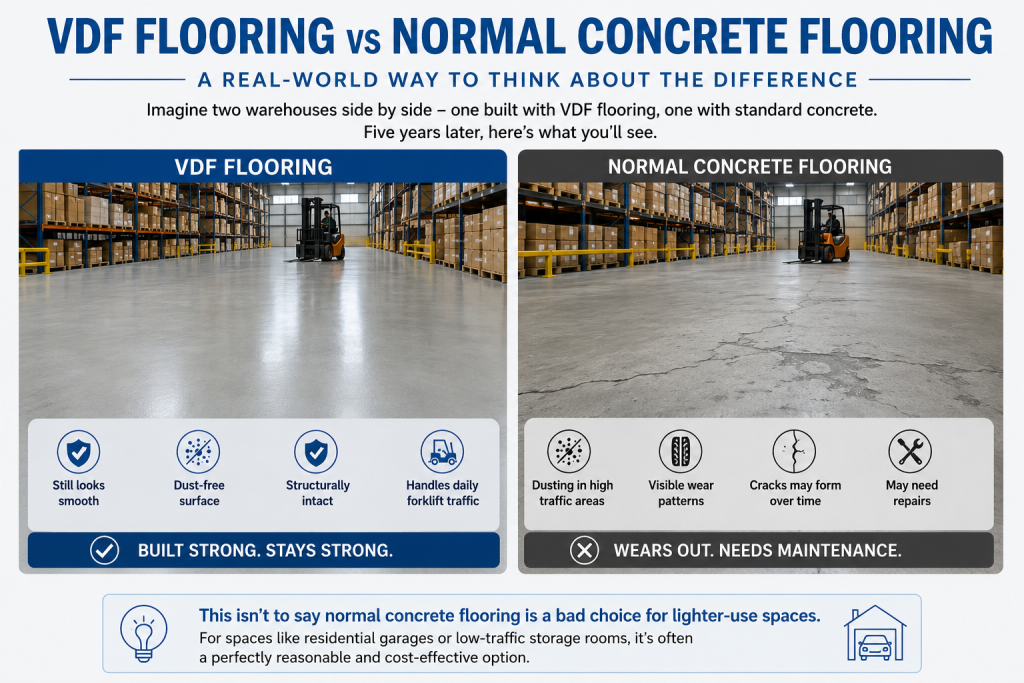
Imagine two warehouses side by side one built with VDF flooring, one with standard concrete. Five years later, the VDF floor still looks smooth, dust-free, and structurally intact under daily forklift traffic. The standard concrete floor, meanwhile, likely shows visible wear patterns, some dusting near high-traffic zones, and possibly a few patched cracks where the surface gave way under repeated heavy loads.
This isn’t to say normal concrete flooring is a bad choice for lighter-use spaces like residential garages or low-traffic storage rooms, it’s often a perfectly reasonable and cost-effective option.
Making the Right Choice for Your Project
The right choice really comes down to how the floor will be used. High-traffic industrial spaces with heavy machinery, forklifts, or constant vehicle movement benefit significantly from VDF’s added strength and longevity. Lighter-use residential or low-footfall commercial spaces can often get by with standard concrete, especially when paired with a good protective topcoat.
A good contractor should walk you through this trade-off honestly, rather than upselling VDF for every project regardless of actual need.
Frequently Asked Questions
Yes, typically it costs more upfront due to specialized equipment and process, but the reduced maintenance and longer lifespan often make it more cost-effective over 10+ years.
VDF is a wet-pour process applied at the time of construction, so it generally can’t be retrofitted onto an already-cured floor but a topcoat solution can improve an existing floor’s performance instead.
It mainly depends on expected foot and vehicle traffic, load weight, and how critical long-term durability is versus upfront budget a site visit from a flooring expert can clarify this quickly.
Ready to Get Started?
Not sure which flooring type fits your project? Get a free consultation from Sarvesh Concrete Floors and we’ll recommend the right solution for your space and budget.