Parking Flooring

Common Parking Flooring Problems During Heavy Rainfall and Their Solutions
Parking Flooring

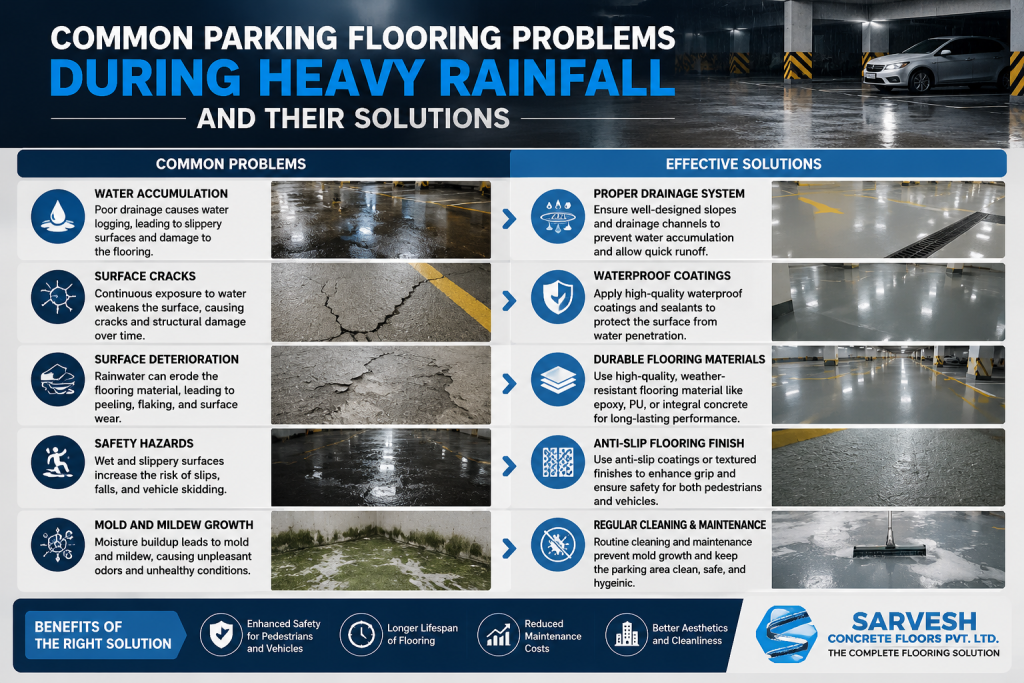
Common Parking Flooring Problems During Heavy Rainfall and Their Solutions

Heavy rainfall can cause serious damage to parking areas if the flooring is not properly designed or maintained. Water accumulation, surface deterioration, and safety hazards are common issues that affect both residential and commercial parking spaces. Understanding these problems and implementing the right solutions can help extend the lifespan of parking flooring while ensuring safety and functionality. 1. Water Pooling and Poor Drainage Problem One of the most common parking flooring issues during heavy rainfall is water pooling. Improper slope design and inadequate drainage systems prevent water from flowing away, leading to standing water on the surface. Solution Install proper drainage channels and water outlets. Ensure the parking surface has the correct slope for water runoff. Regularly clean drains to prevent blockages. Use high-quality flooring materials designed for outdoor conditions. 2. Surface Cracks and Damage Problem Excess moisture can seep into cracks and weaken the flooring structure. Over time, repeated exposure to rainwater can expand existing cracks and cause further damage. Solution Repair cracks immediately to prevent water penetration. Apply protective sealants to create a water-resistant surface. Schedule routine inspections and maintenance. 3. Slippery Parking Surfaces Problem Rainwater can make parking floors slippery, increasing the risk of accidents for both vehicles and pedestrians. Solution Use textured flooring finishes that provide better grip. Apply anti-slip coatings where necessary. Keep the surface clean and free from algae or moss growth. 4. Erosion and Surface Wear Problem Rainwater can make parking floors slippery, increasing the risk of accidents for both vehicles and pedestrians. Solution Choose durable flooring systems such as stamped concrete. Apply protective coatings and sealers. Conduct regular maintenance to address early signs of wear. 5. Moss and Algae Growth Problem Moist conditions created by heavy rainfall encourage the growth of moss, algae, and mold on parking surfaces. These not only affect appearance but also create safety hazards. Solution Clean parking areas regularly using appropriate cleaning methods. Improve drainage to reduce moisture retention. Use anti-fungal and anti-algae treatments when required. 6. Fading and Surface Discoloration Problem Frequent exposure to rain and environmental conditions can cause flooring surfaces to lose their original color and appearance. Solution Apply UV-resistant and weather-resistant sealers. Use high-quality flooring materials designed for outdoor applications. Reapply protective coatings periodically. Why Stamped Concrete is a Reliable Solution Stamped concrete flooring offers excellent durability, weather resistance, and low maintenance requirements. Its sealed surface helps minimize water penetration, while its textured finish improves slip resistance. With proper installation and maintenance, stamped concrete can effectively withstand heavy rainfall and maintain its appearance for years. Conclusion Heavy rainfall can lead to several parking flooring challenges, including water pooling, cracks, slippery surfaces, erosion, and algae growth. However, these problems can be minimized through proper drainage, regular maintenance, and the use of durable flooring materials. Investing in high-quality parking flooring solutions helps ensure safety, longevity, and better performance throughout the monsoon season. Heavy rainfall can cause serious damage to parking areas if the flooring is not properly designed or maintained. Water accumulation, surface deterioration, and safety hazards are common issues that affect both residential and commercial parking spaces. Understanding these problems and implementing the right solutions can help extend the lifespan of parking flooring while ensuring safety and functionality.

Top Parking Flooring Options for Shopping Mall Parking Areas
Parking Flooring

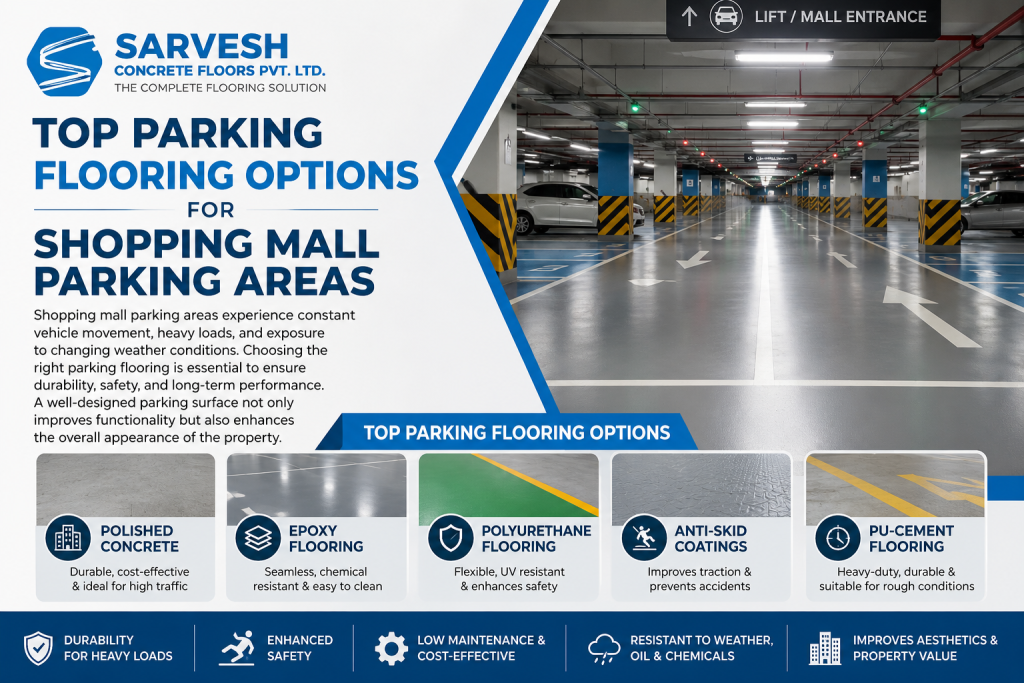
Top Parking Flooring Options for Shopping Mall Parking Areas

Shopping mall parking areas experience constant vehicle movement, heavy loads, and exposure to changing weather conditions. Choosing the right parking flooring is essential to ensure durability, safety, and long-term performance. A well-designed parking surface not only improves functionality but also enhances the overall appearance of the property. 1. Stamped Concrete Flooring Why It Is a Popular Choice Stamped concrete flooring is one of the most preferred solutions for shopping mall parking areas. It combines strength, durability, and aesthetics, making it ideal for high-traffic environments. Benefits Withstands heavy vehicle traffic Attractive patterns and decorative finishes Low maintenance requirements Long service life Cost-effective compared to natural stone Stamped concrete can also be customized with different colors and textures to complement the mall’s exterior design. 2. Concrete Flooring Reliable and Durable Solution Traditional concrete flooring remains a popular option for large parking areas due to its strength and affordability. Benefits High load-bearing capacity Long-lasting performance Suitable for outdoor and multi-level parking Easy maintenance Concrete flooring is commonly used in commercial parking facilities because of its durability and cost efficiency. 3. Interlocking Paver Blocks Attractive and Functional Interlocking pavers provide a visually appealing parking surface while offering flexibility in design and installation. Benefits Easy repair and replacement Good drainage performance Available in various colors and patterns Strong and durable Paver blocks are often used in premium shopping complexes and commercial developments. 4. Epoxy Flooring Ideal for Covered Parking Areas Epoxy flooring creates a smooth, durable, and professional-looking surface for basement and indoor parking spaces. Benefits Excellent resistance to stains and chemicals Easy to clean Bright and attractive finish Improves visibility inside parking structures Epoxy flooring is particularly suitable for multi-level and underground mall parking areas. 5. PU (Polyurethane) Flooring High Performance and Flexibility Polyurethane flooring is designed to handle heavy traffic while providing excellent resistance to abrasion and weather conditions. Benefits Crack-resistant performance UV and weather resistance Comfortable under varying temperatures Long-lasting durability This flooring option is often selected for premium commercial projects. Factors to Consider When Choosing Parking Flooring Before selecting a flooring solution for a shopping mall parking area, consider: Traffic Volume The flooring should withstand continuous vehicle movement and heavy loads. Maintenance Requirements Choose a flooring system that is easy to maintain and repair. Drainage Performance Proper water drainage helps prevent surface damage and improves safety. Safety Features Slip-resistant surfaces reduce the risk of accidents during rainy conditions. Budget Evaluate installation and long-term maintenance costs before making a decision. Which Flooring Option is Best? For most shopping mall parking areas, stamped concrete flooring offers the best balance of durability, appearance, maintenance, and cost-effectiveness. It provides a premium look while handling heavy traffic and weather exposure efficiently. For covered parking spaces, epoxy flooring can be an excellent additional solution. Conclusion Selecting the right parking flooring is essential for ensuring safety, durability, and a positive visitor experience. Stamped concrete, concrete flooring, interlocking pavers, epoxy flooring, and polyurethane flooring are among the top choices for shopping mall parking areas. By investing in a high-quality flooring system, shopping malls can improve functionality, reduce maintenance costs, and enhance their property’s overall appeal.

Best Flooring Solutions for EV Parking Areas and Commercial Parking Spaces
Parking Flooring

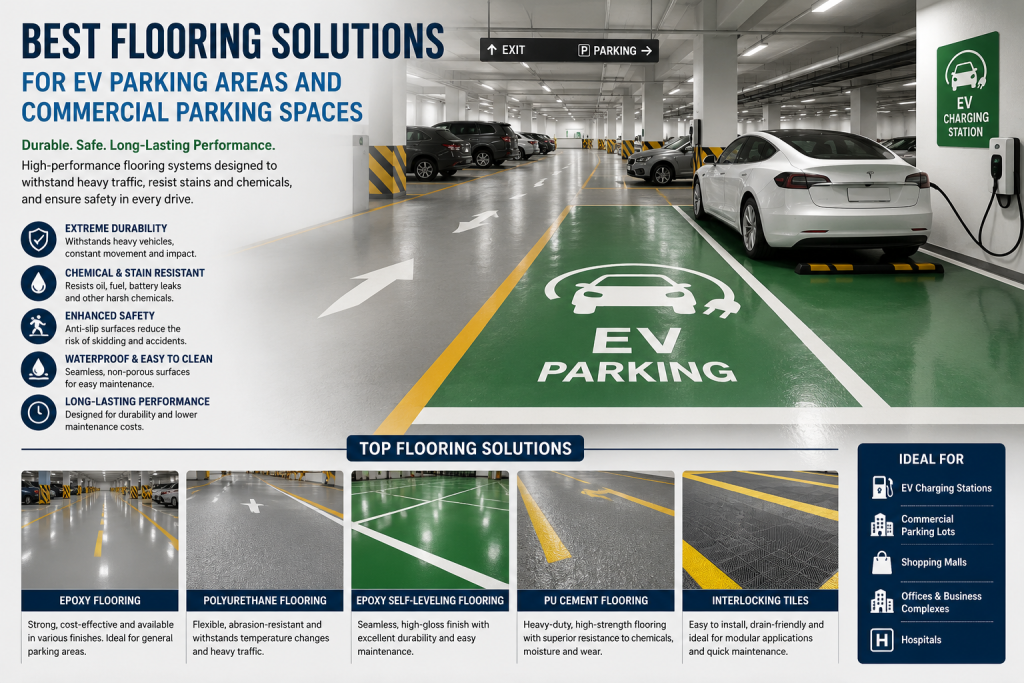
Best Flooring Solutions for EV Parking Areas and Commercial Parking Spaces

Electric vehicle (EV) parking areas and commercial parking spaces require strong and durable flooring. These areas experience heavy vehicle movement, oil stains, water exposure, and daily wear. Choosing the right flooring solution is important for safety and long-term performance. Best Flooring Options for Parking Areas 1. Epoxy Flooring Epoxy flooring is one of the best choices for parking spaces because it provides: High durability Chemical resistance Smooth finish Easy maintenance 2. VDF Flooring VDF flooring is ideal for parking areas with heavy vehicle traffic. It offers strong load-bearing capacity and long-lasting performance. 3. Polished Concrete Flooring Polished concrete flooring gives parking spaces a clean and modern look while reducing dust formation. 4. Anti-Skid Flooring Safety is important in parking areas. Anti-skid flooring reduces the risk of slipping during rainy conditions. 5. PU Flooring PU flooring is flexible and resistant to cracks, making it suitable for commercial parking spaces. Important Features Required in Parking Flooring Heavy load resistance Water resistance Oil and chemical resistance Slip resistance Easy maintenance Why Quality Flooring Matters for EV Parking Areas EV parking spaces often include charging stations and continuous vehicle movement. Durable flooring helps maintain safety, appearance, and operational efficiency. Conclusion The right flooring solution improves the durability, safety, and appearance of EV parking areas and commercial parking spaces. Epoxy, VDF, polished concrete, and anti-skid flooring are some of the best options for long-lasting performance.

Why Parking Flooring Matters More Than You Think
Parking Flooring

Cost vs Durability: Choosing the Right Parking Flooring System

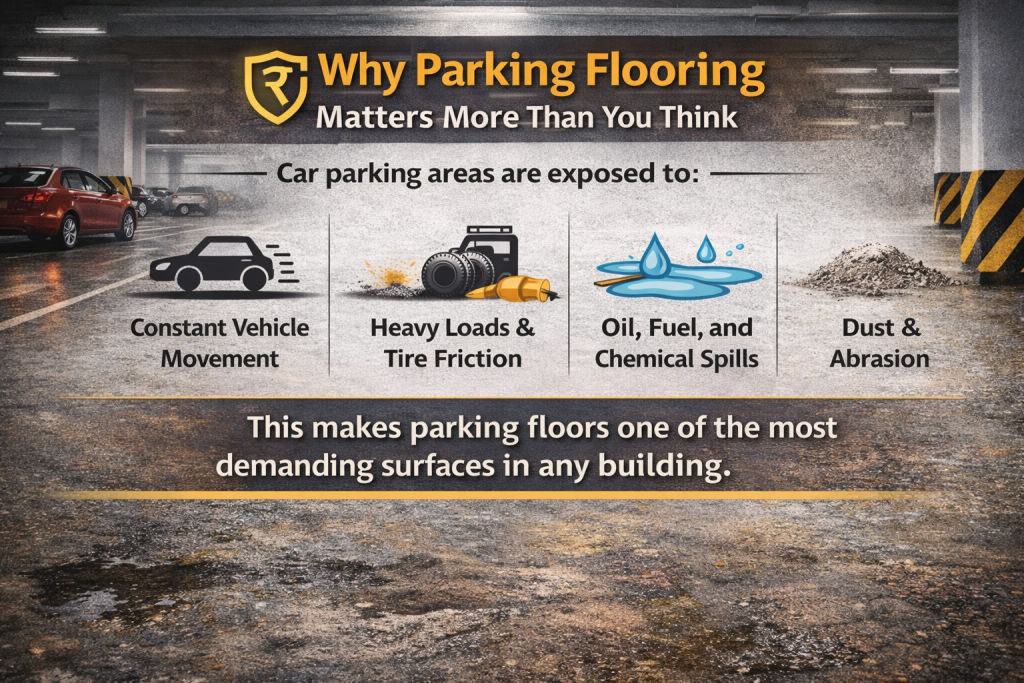
When it comes to car parking areas—whether basement, podium, or stilt—one of the most common questions builders and developers face is: Should we go for a low-cost flooring option or invest in a durable system? At first glance, saving on initial costs may seem like a smart decision. But in reality, parking flooring is a long-term investment, and choosing the wrong system can lead to frequent repairs, safety issues, and higher maintenance costs. In this blog, we break down the balance between cost and durability to help you choose the right parking flooring system. Why Parking Flooring Matters More Than You Think Car parking areas are exposed to: Constant vehicle movement Heavy loads and tire friction Oil, fuel, and chemical spills Water seepage and humidity Dust and abrasion This makes parking floors one of the most demanding surfaces in any building. The Cost Factor – What Are You Really Paying For? When evaluating flooring costs, many people only consider the initial installation price. However, the true cost includes: Material quality Installation technique Maintenance requirements Repair frequency Lifespan of the flooring A low-cost solution may save money today but can result in higher expenses over time. Common Parking Flooring Options: Cost vs Durability 1. Plain Concrete Flooring (VDF / Trimix) Cost: Low Durability: Moderate Pros: Economical Strong base for heavy loads Cons: Dusting over time Prone to cracks No protection against water or chemicals Suitable for: Basic or temporary parking areas 2. Epoxy Flooring Durability: Good (in dry conditions) Pros: Smooth, dust-free finish Good strength and abrasion resistance Aesthetic appeal Cons: Not flexible (can crack with movement) Not ideal for high moisture or water leakage areas Suitable for: Covered parking with minimal moisture 3. PU (Polyurethane) Flooring Cost: Higher initial cost Durability: Excellent Pros: Flexible and crack-bridging Highly resistant to water, oil, and chemicals Anti-skid surface for safety Long lifespan with minimal maintenance Cons: Higher upfront investment Suitable for: Basement, podium, and heavy-use parking areas Cost vs Durability Comparison Flooring Type Initial Cost Maintenance Cost Lifespan Overall Value Plain Concrete Low High Low ⭐⭐ Epoxy Flooring Medium Medium Medium ⭐⭐⭐ PU Flooring High Low High ⭐⭐⭐⭐⭐ Conclusion: PU flooring offers the best long-term value despite higher initial cost. Hidden Costs of Cheap Flooring Choosing low-cost flooring can lead to: Frequent repairs and patchwork Water seepage issues Unsafe slippery surfaces Damage to vehicles and property Negative impact on property value What you save initially, you may end up paying 2–3 times more in the long run. Special Consideration for Mumbai Projects In cities like Mumbai, parking floors face: Heavy rainfall High humidity Water leakage issues This makes PU flooring with proper waterproofing the most reliable and durable solution. How to Choose the Right Flooring System Ask yourself: ✔ Is the parking area exposed to water or moisture? ✔ Will it handle heavy vehicle traffic? ✔ Do you want long-term durability with low maintenance? ✔ Is safety (anti-skid) a priority? If your answer is “yes” to most of these, investing in a high-performance flooring system like PU is the right decision. Why Expert Execution Matters Even the best materials can fail if not applied correctly. A professional contractor ensures: Proper surface preparation Correct system selection High-quality application Long-lasting performance With over 26+ years of experience, Sarvesh Concrete Floors Pvt. Ltd. delivers durable, cost-effective car parking flooring solutions tailored to your project needs. Final Thoughts When choosing a parking flooring system, don’t just focus on initial cost—focus on lifetime value. ✔ Cheap flooring = short-term savings, long-term problems ✔ Quality flooring = higher upfront cost, long-term peace of mind The smart choice is always the one that lasts. Need Help Choosing the Right Flooring? Connect with Sarvesh Concrete Floors Pvt. Ltd. for expert guidance and reliable car parking flooring solutions across Mumbai and India.

Scroll to Top