commercial flooring

Top Parking Flooring Options for Shopping Mall Parking Areas
Parking Flooring

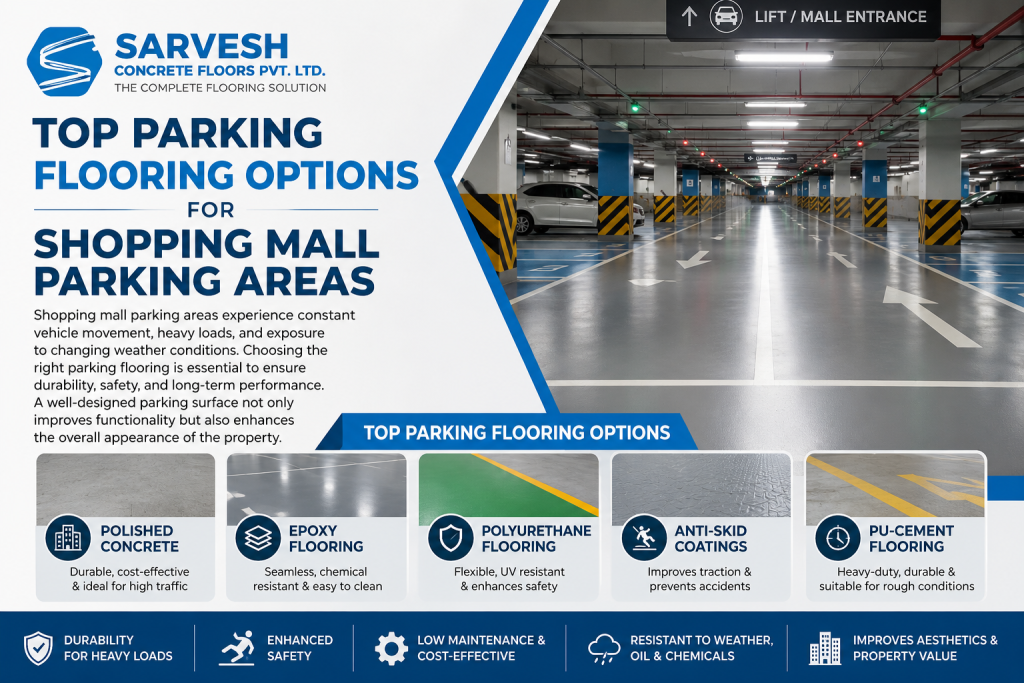
Top Parking Flooring Options for Shopping Mall Parking Areas

Shopping mall parking areas experience constant vehicle movement, heavy loads, and exposure to changing weather conditions. Choosing the right parking flooring is essential to ensure durability, safety, and long-term performance. A well-designed parking surface not only improves functionality but also enhances the overall appearance of the property. 1. Stamped Concrete Flooring Why It Is a Popular Choice Stamped concrete flooring is one of the most preferred solutions for shopping mall parking areas. It combines strength, durability, and aesthetics, making it ideal for high-traffic environments. Benefits Withstands heavy vehicle traffic Attractive patterns and decorative finishes Low maintenance requirements Long service life Cost-effective compared to natural stone Stamped concrete can also be customized with different colors and textures to complement the mall’s exterior design. 2. Concrete Flooring Reliable and Durable Solution Traditional concrete flooring remains a popular option for large parking areas due to its strength and affordability. Benefits High load-bearing capacity Long-lasting performance Suitable for outdoor and multi-level parking Easy maintenance Concrete flooring is commonly used in commercial parking facilities because of its durability and cost efficiency. 3. Interlocking Paver Blocks Attractive and Functional Interlocking pavers provide a visually appealing parking surface while offering flexibility in design and installation. Benefits Easy repair and replacement Good drainage performance Available in various colors and patterns Strong and durable Paver blocks are often used in premium shopping complexes and commercial developments. 4. Epoxy Flooring Ideal for Covered Parking Areas Epoxy flooring creates a smooth, durable, and professional-looking surface for basement and indoor parking spaces. Benefits Excellent resistance to stains and chemicals Easy to clean Bright and attractive finish Improves visibility inside parking structures Epoxy flooring is particularly suitable for multi-level and underground mall parking areas. 5. PU (Polyurethane) Flooring High Performance and Flexibility Polyurethane flooring is designed to handle heavy traffic while providing excellent resistance to abrasion and weather conditions. Benefits Crack-resistant performance UV and weather resistance Comfortable under varying temperatures Long-lasting durability This flooring option is often selected for premium commercial projects. Factors to Consider When Choosing Parking Flooring Before selecting a flooring solution for a shopping mall parking area, consider: Traffic Volume The flooring should withstand continuous vehicle movement and heavy loads. Maintenance Requirements Choose a flooring system that is easy to maintain and repair. Drainage Performance Proper water drainage helps prevent surface damage and improves safety. Safety Features Slip-resistant surfaces reduce the risk of accidents during rainy conditions. Budget Evaluate installation and long-term maintenance costs before making a decision. Which Flooring Option is Best? For most shopping mall parking areas, stamped concrete flooring offers the best balance of durability, appearance, maintenance, and cost-effectiveness. It provides a premium look while handling heavy traffic and weather exposure efficiently. For covered parking spaces, epoxy flooring can be an excellent additional solution. Conclusion Selecting the right parking flooring is essential for ensuring safety, durability, and a positive visitor experience. Stamped concrete, concrete flooring, interlocking pavers, epoxy flooring, and polyurethane flooring are among the top choices for shopping mall parking areas. By investing in a high-quality flooring system, shopping malls can improve functionality, reduce maintenance costs, and enhance their property’s overall appeal.

Epoxy flooring is a type of resinous surface coating applied to concrete floors to create a durable, high-performance surface
Epoxy Flooring

Top 7 Benefits of Epoxy Flooring for Commercial Spaces

Epoxy flooring is rapidly becoming the preferred choice for commercial spaces due to its durability, aesthetic versatility, and ease of maintenance.Top 7 Benefits of Epoxy Flooring for Commercial Spaces This advanced flooring solution offers numerous benefits that make it ideal for a variety of commercial environments, from warehouses and factories to retail stores and hospitals. Epoxy flooring contributes to its growing popularity among business owners and facility managers seeking a reliable, cost-effective, and visually appealing flooring option. Whether you’re renovating an existing space or constructing a new one, understanding the benefits of epoxy flooring can help you make an informed decision that enhances both the functionality and the aesthetic appeal of your commercial property. What is epoxy flooring? Epoxy flooring is a type of resinous surface coating applied to concrete floors to create a durable, high-performance surface. It is essentially a two-part system consisting of resin, which is a binder that acts as the base of the coating, and a hardener, a catalyst that reacts with the resin to create a strong, rigid surface. When these components are mixed, a chemical reaction occurs, transforming the liquid mixture into a tough, plastic-like material that bonds to the concrete substrate.Here Top 7 Benefits of Epoxy Flooring for Commercial Spaces  Epoxy flooring is highly suitable for a variety of commercial spaces due to its numerous advantages. Here’s a breakdown of why it excels in commercial settings: Exceptional Durability and Strength  Epoxy floors can withstand heavy foot traffic, constant use of machinery, and potential impacts without showing significant wear or tear. This makes them ideal for high-traffic areas like warehouses, factories, retail stores, restaurants, and showrooms.  Superior Chemical Resistance  Unlike some materials that can be damaged by harsh chemicals, epoxy floors are resilient to a wide range of chemicals, including oils, solvents, and acids. This makes them perfect for laboratories, workshops, chemical plants, and other environments where chemical spills are a potential concern.  Easy maintenance and cleaning  The smooth, non-porous surface of epoxy flooring simplifies cleaning and maintenance routines. Regular sweeping, mopping, and occasional degreasing are typically sufficient to keep the floor looking its best. This translates to lower cleaning costs and reduced downtime compared to some other flooring options.With commercial places being very fast-paced and bustling in nature, epoxy flooring is the right solution because it can withstand heavy foot traffic and frequent movement of machinery without showing signs of wear and tear. This resilience makes it an ideal choice for areas that experience constant activity. Contact Sarvesh Concrete Floors Pvt. Ltd. today for epoxy flooring solutions!  Improved Safety  Epoxy flooring offers enhanced slip resistance, minimizing the risk of accidents in areas prone to spills or moisture. This is crucial for commercial spaces where employee and customer safety is a top priority. Additionally, the  surface minimizes gaps where dirt or debris can accumulate, promoting a cleaner and more hygienic environment.  Aesthetics and Customization  Epoxy flooring comes in a wide range of colors and can be finished with decorative flakes or chips to create a visually appealing surface. This allows for customization that can complement the overall design aesthetic of the commercial space, potentially enhancing the brand image or creating a specific ambiance.  Long Lifespan  With proper care and maintenance, epoxy flooring boasts a lifespan exceeding 10–20 years with some minimal maintenance. This translates to a cost-effective flooring solution in the long run, as replacements are less frequent compared to other materials. This can significantly reduce maintenance costs and the downtime associated with floor repairs or replacements.  Versatility across Industries  The benefits of epoxy coatings on flooring extend to a wide range of commercial spaces. From industrial settings like warehouses and factories to retail stores, showrooms, laboratories, and even restaurants, epoxy flooring offers the perfect blend of durability, chemical resistance, easy maintenance, safety features, and aesthetics. Frequently Asked Questions What are the benefits of Trimix Flooring? Superior strength and durability Reduced water and cement consumption Faster construction time Smooth and even surface finish Resistance to abrasion and wear Where can floor self-leveling be used? Where can floor self-leveling be used? Floor self-leveling is suitable for a variety of applications, including: Residential spaces such as living rooms, kitchens, and basements. Commercial environments, including retail stores, offices, and showrooms. Industrial facilities and warehouses where flat and level surfaces are crucial for operations. How is stamped concrete installed? Preparation of the base and ensuring proper compaction. Pouring and leveling the concrete mix. Application of release agents and color hardeners to achieve desired colors and textures. Stamping with textured mats or tools to create patterns and textures. Curing and sealing to enhance durability and color retention. What is the installation process for industrial flooring? Surface preparation, including cleaning and possibly shot blasting or grinding to ensure proper adhesion. Application of the selected flooring system, which may include multiple layers depending on the specifications. Curing and drying time, followed by any necessary finishing touches or coatings.   What is the downtime for installing epoxy flooring? The downtime varies depending on the size of the area, the complexity of the installation, and environmental conditions. In many cases, epoxy flooring can be installed in stages to minimize disruption to operations.

Scroll to Top