
Industrial floors are exposed to heavy machinery, forklift movement, chemicals, equipment impact and continuous operations. Without regular maintenance, even durable concrete and epoxy flooring systems can develop cracks, damaged joints and worn surfaces.
Following an industrial flooring maintenance checklist helps factory owners identify problems early, improve workplace safety and reduce unexpected repair expenses.
Why Industrial Flooring Maintenance Is Important
A damaged factory floor can affect material handling, equipment movement, workplace safety and production efficiency.
Regular inspection and timely maintenance can help:
- Reduce premature floor deterioration
- Identify cracks and damaged joints early
- Maintain smoother forklift movement
- Minimize unplanned maintenance interruptions
- Extend the service life of existing flooring
Essential Industrial Flooring Maintenance Checklist
1. Inspect Concrete Floor Cracks
Check production areas, loading zones and forklift routes for cracks. Pay particular attention to widening cracks, broken edges and changes in floor level.Cracks showing movement or structural concerns should be professionally assessed.
2. Check Expansion and Construction Joints
Industrial floor joints experience repeated loading from forklifts and material-handling equipment.Inspect joints for damaged edges, missing sealant, excessive movement and uneven transitions.
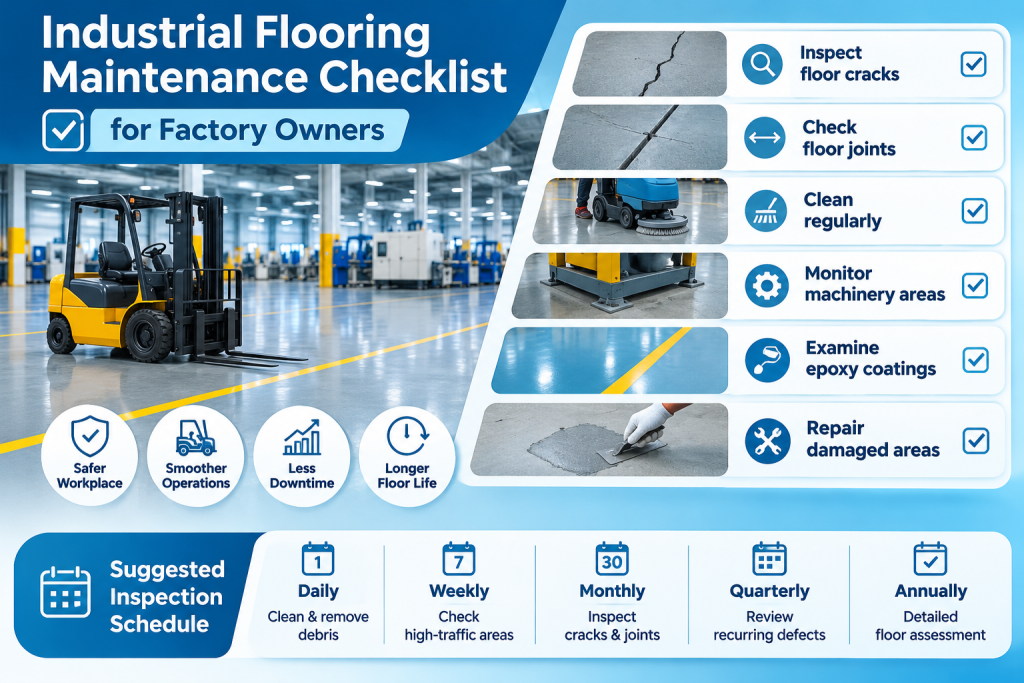
3. Clean Industrial Flooring Regularly
Dust, grease, oil and chemical residues can create slippery surfaces and contribute to coating deterioration.Use cleaning products and methods compatible with the installed flooring system.
4. Monitor Heavy Machinery Areas
Machinery foundations and nearby concrete floors may experience vibration, impact and concentrated loads.Inspect these areas for cracking, settlement and surface deterioration.
5. Examine Epoxy and Protective Coatings
Check coated floors for peeling, blistering, scratches, worn traffic lanes and chemical damage.Early localized repairs may help prevent larger coating failures.
6. Repair Uneven and Damaged Surfaces
Broken concrete patches and uneven floor sections can interfere with forklift movement and daily operations.Arrange suitable concrete repairs or leveling work when necessary.
Suggested Factory Flooring Inspection Schedule
| Frequency | Maintenance Activity |
|---|---|
| Daily | Remove debris, spills and surface contamination |
| Weekly | Check high-traffic areas for visible damage |
| Monthly | Inspect cracks, joints and coating conditions |
| Quarterly | Review recurring defects and high-load zones |
| Annually | Conduct a detailed floor condition assessment |
Inspection frequency should be adjusted according to traffic, operating conditions and the flooring manufacturer’s recommendations.
When Should You Contact an Industrial Flooring Contractor?
Professional inspection may be necessary when cracks continue widening, concrete joints deteriorate, coatings repeatedly peel or floor levels begin affecting machinery and material movement.
Frequently Asked Questions
Routine visual checks should be carried out regularly, with more detailed inspections based on floor usage, traffic intensity and observed damage.
In many cases, localized concrete repair, joint restoration or coating repair can extend the useful life of an existing floor.
Sarvesh Concrete Floors Pvt. Ltd. provides industrial concrete floor repair, floor leveling and renovation solutions for factories, warehouses and manufacturing facilities.
Contact our team for professional floor inspection and suitable repair recommendations.
Contact Us: +91 8850563804
Email: Mdsarvesh@sacof.in
Website: https://sacof.in/