
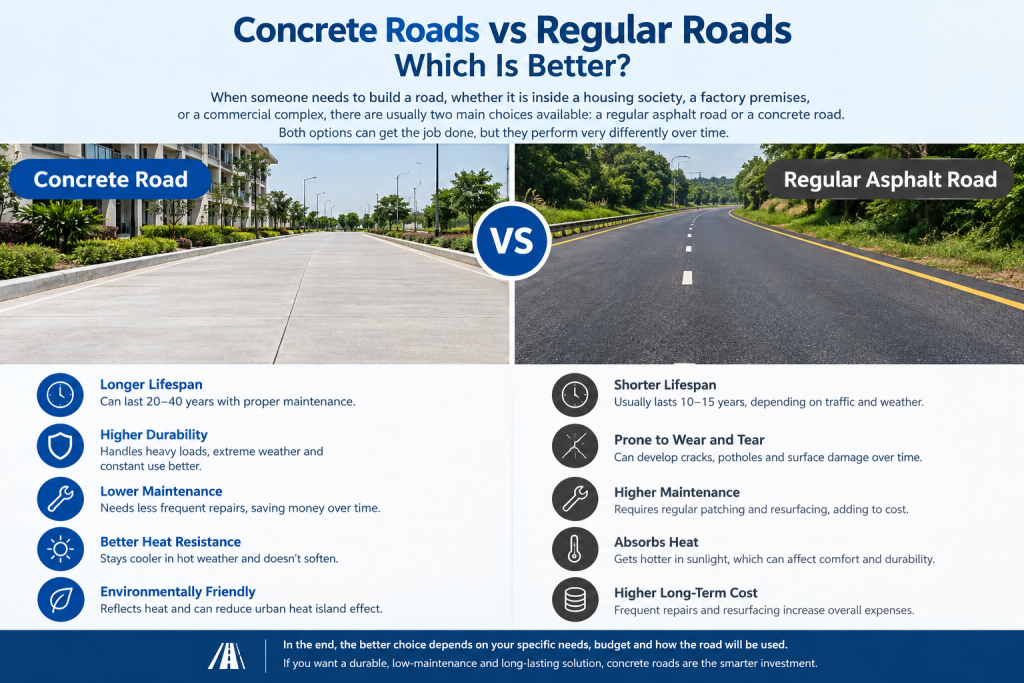
When someone needs to build a road, whether it is inside a housing society, a factory premises, or a commercial complex, there are usually two main choices available: a regular asphalt road or a concrete road. Both options can get the job done, but they perform very differently over time. In this blog, we will break down the differences between the two in simple terms so you can understand which option makes more sense for your property.
What Are Regular Asphalt Roads
Asphalt roads are the type most people are familiar with. They are made using a mix of bitumen, which is a sticky, black substance, combined with small stones and gravel. Asphalt roads are popular because they are quick to lay and usually cost less at the beginning. However, they are also softer than concrete, which means they tend to wear out faster, especially in areas with heavy vehicle traffic.
Comparing Concrete Roads and Asphalt Roads
1. Strength and Durability
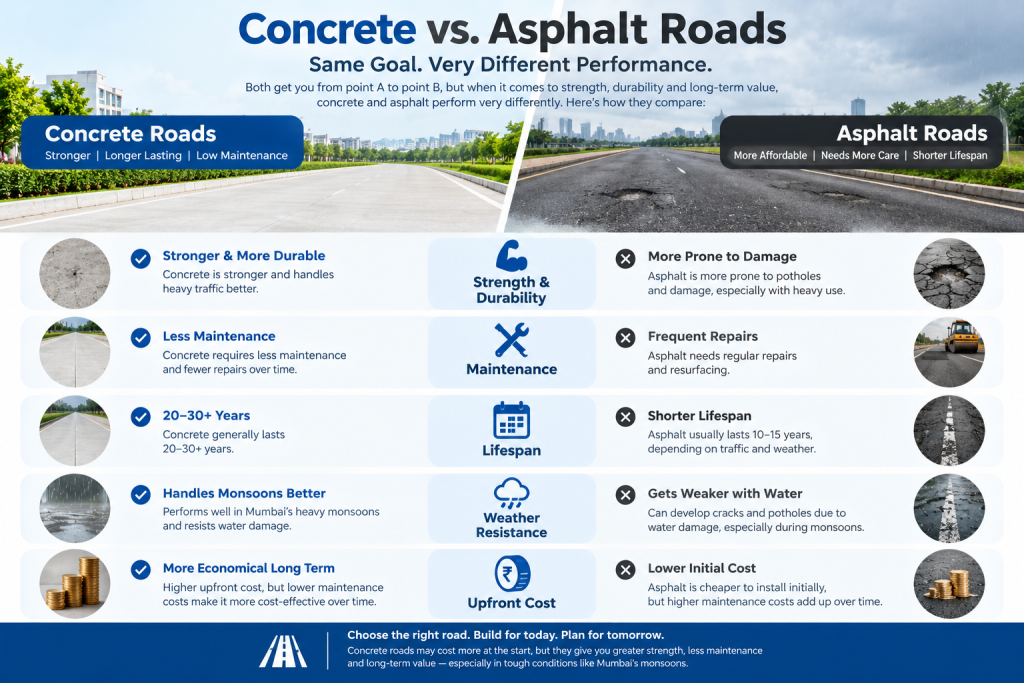
Concrete roads are naturally stronger and can carry heavier vehicles without developing cracks or dents easily. Asphalt roads, on the other hand, tend to develop potholes and surface damage much sooner, especially in areas with frequent heavy traffic.
2. Maintenance and Repair Costs
Asphalt roads need regular resurfacing and patching to stay in good condition, which adds up in cost over the years. Concrete roads, once properly laid, need very little maintenance, which saves a significant amount of money in the long run.
3. Lifespan
This is one of the biggest differences between the two. Concrete roads typically last much longer than asphalt roads, often 20 to 30 years or more with only minimal repairs. Asphalt roads usually have a shorter lifespan and need more frequent attention.
4. Weather Resistance
Mumbai’s heavy monsoon season is tough on roads. Concrete handles water exposure much better than asphalt, resisting damage and erosion far more effectively, which is an important factor for anyone building roads in this region.
5. Upfront Cost
This is where asphalt has an advantage. Asphalt roads are usually cheaper to install at first. However, when you consider the savings on maintenance and repairs over many years, concrete roads often turn out to be more cost-effective in the long run.
Where Concrete Roads Make the Most Sense
- Housing society internal roads that see daily vehicle movement
- Factory and warehouse premises with heavy trucks and equipment
- Commercial complexes with constant vehicle traffic
- Areas that frequently face monsoon flooding and water damage
So, Which One Should You Choose
If your priority is a lower cost right now and the road will not face heavy traffic, asphalt might work fine. But if you want a road that lasts for decades with very little maintenance, and you are willing to invest a bit more upfront, concrete is usually the smarter long-term choice, especially for busy or heavy-traffic areas.
Why Choose SACOF for Concrete Road Construction
Sarvesh Concrete Floors Pvt. Ltd. brings 26 years of experience in building strong, long-lasting concrete roads for societies, industries, and commercial spaces across Mumbai. We help clients understand their options and choose the right solution based on their traffic needs and budget.
Need expert flooring work done right? Call Sarvesh Concrete Floors Pvt. Ltd. at +91 88505 63804 or email Mdsarvesh@sacof.in for a free site inspection.