
If your society parking looks dusty, cracked, stained with oil, or constantly needs repairs — the problem is not maintenance… it’s the floor system.
Most housing societies in India still use IPS / plain concrete floors in basements and stilts. These surfaces were never designed for:
- continuous tyre friction
- fuel & oil leakage
- water seepage
- turning movement of vehicles
- modern heavy SUVs & EVs
That’s where PU (Polyurethane) Car Parking Coating becomes important.
This guide explains everything a housing society committee should know before deciding.
1. What is PU Coating?
PU coating (Polyurethane flooring) is a flexible, seamless protective layer applied over concrete floors to create a durable parking surface.
Think of it as a rubber-like waterproof protective skin bonded permanently to the concrete.
It is specially designed for:
- basement parking
- stilt parking
- podium parking
- ramp areas
- driveways
Unlike paint or epoxy, PU is elastic — it stretches and absorbs movement instead of cracking.

2. Why Normal Concrete Parking Fails in Societies
The Real Reason: Concrete Moves
Buildings expand, shrink, vibrate and settle daily due to:
- temperature change
- vehicle movement
- water penetration
- structural vibration
Plain concrete cannot handle this movement → cracks start.
Once Cracks Start
Then comes the chain reaction:
- Water enters slab
- Steel rusts
- Concrete breaks
- Leakage into flats
- Re-plastering cost
- Structural damage risk
Most societies spend lakhs every few years on repeated repairs because they only repair the symptom — not the cause
3. How PU Coating Solves the Problem
PU coating works differently from traditional flooring.
Problem | What Happens in Normal Floor | What Happens in PU Floor |
Expansion & shrinkage | Cracks | Absorbed by elastic coating |
Tyre turning | Surface powder | No damage |
Oil leakage | Permanent stains | Easy cleaning |
Water seepage | Leakage to slab | Waterproof barrier |
Ramp braking | Slippery | Anti-skid texture |
PU becomes a protective membrane + wear surface + waterproofing layer all in one system.
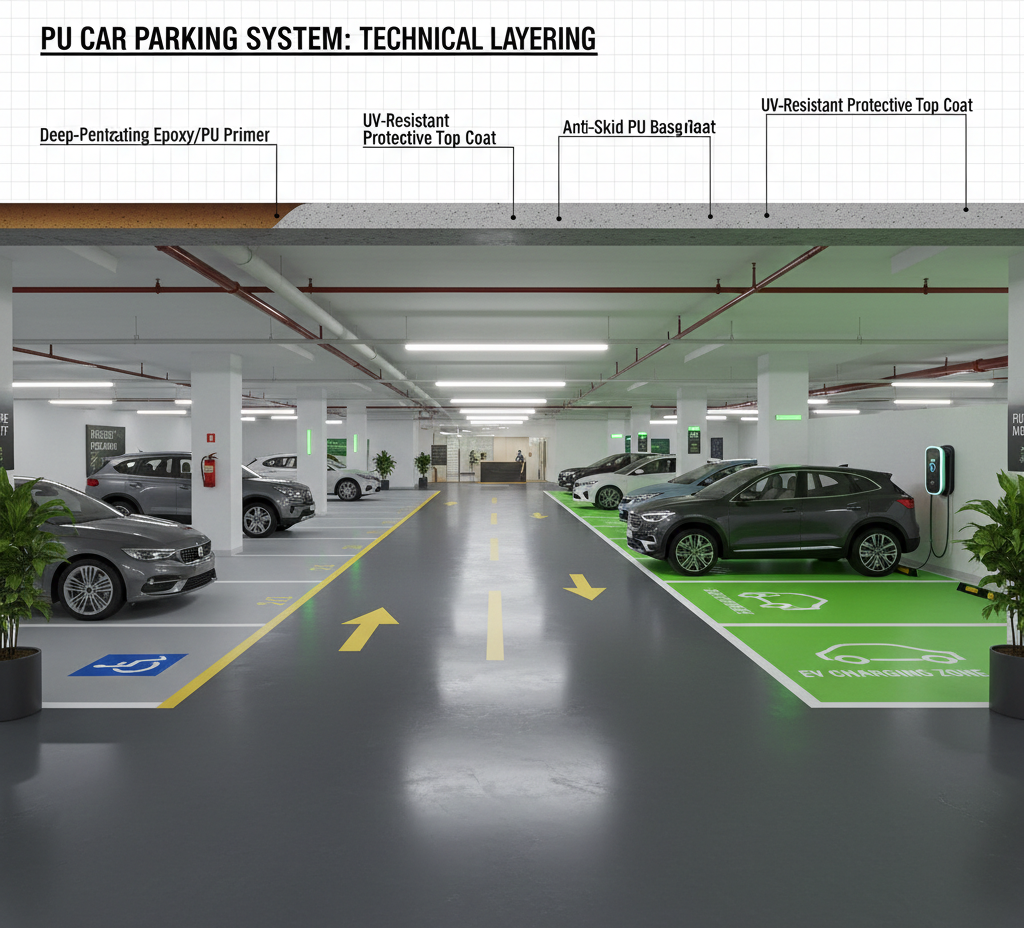
4. Structure of PU Car Parking System
A proper system is not just one coat — it is a multilayer engineered flooring.
- Concrete grinding & repair
- Primer bonding coat
- Elastic PU base layer
- Self leveling PU middle layer
- Anti skid top coat
- Parking marking & numbering
Total thickness: usually 2 mm – 3 mm
This thickness is enough because PU works by flexibility, not hardness.
5. PU vs Epoxy vs Paint (Very Important for Committees)
Feature | Paint | Epoxy | PU Coating |
Life | 6–12 months | 2–3 years | 6–10 years |
Crack resistance | None | Low | Excellent |
Waterproof | No | Partial | Yes |
Vehicle turning resistance | Poor | Moderate | Excellent |
Suitable for parking | No | Limited | Best |
Repair frequency | Every year | 2–3 years | Long term |
Conclusion:
Epoxy is good for factories.
PU is made for parking.
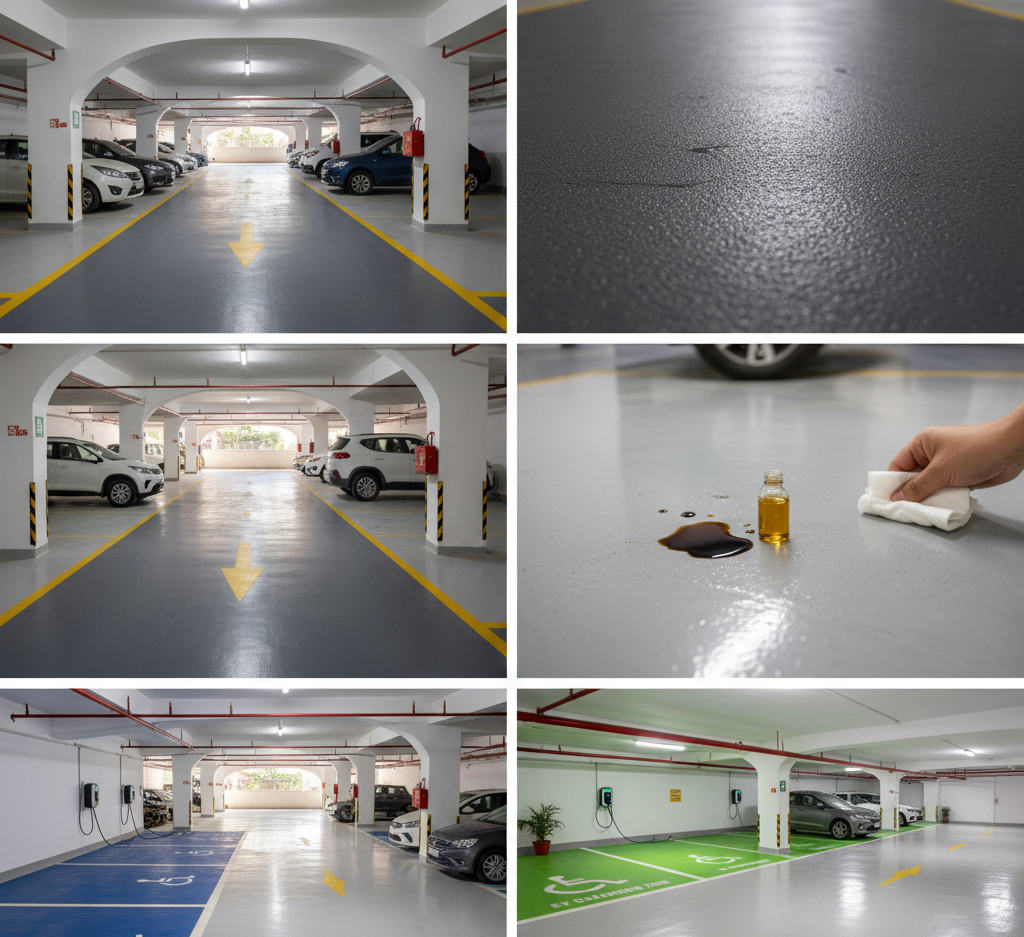
6. Benefits for Housing Societies
- Stops Leakage Complaints
The biggest advantage — protects slab from water ingress.
- Increases Property Value
A clean modern parking improves buyer perception immediately.
- Safety
Anti-skid ramps prevent accidents (very important during monsoon).
- Easy Cleaning
Dust free surface — housekeeping cost reduces.
- No More Annual Painting
Societies save maintenance cost long term.
7. Where PU Coating is Most Needed
Highest priority areas:
- Turning zones
- Ramp slope
- Basement parking
- Podium parking
- Near lift lobby
- Entry & exit gates
These areas face maximum tyre friction.
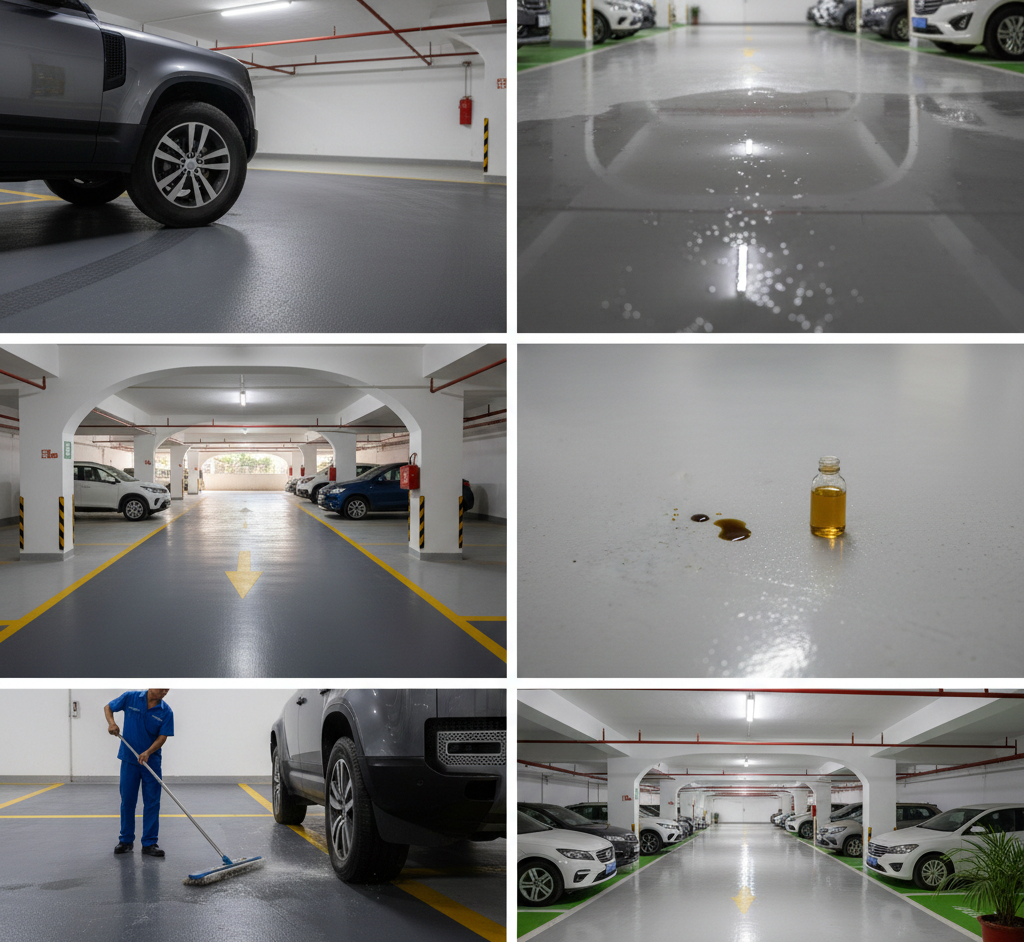
8. How Long Does PU Coating Last?
Typical lifespan in housing societies:
6 to 10 years (with normal usage)
Factors affecting life:
- quality of concrete base
- thickness applied
- contractor experience
- water drainage condition
9. Common Mistakes Societies Make
Choosing lowest quotation
❌ Doing only epoxy because cheaper
❌ Applying coating on wet concrete
❌ Skipping crack repairs
❌ No slope correction before coating
Flooring fails not because PU is bad — but because preparation is ignored.
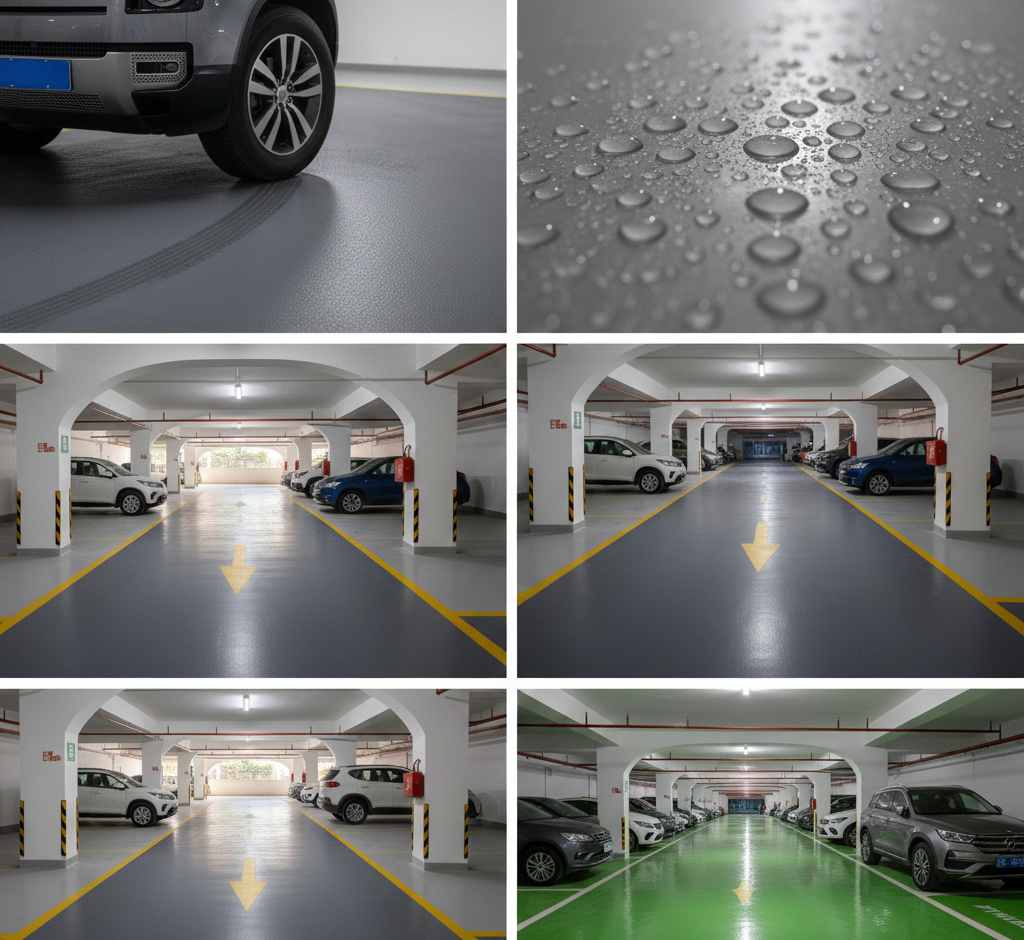
10. Ideal Time to Apply
Best stage:
- After civil repairs
- Before leakage starts
- After waterproofing treatment
- During society renovation cycle
Worst time:
After major slab damage (cost becomes higher)
11. Maintenance After PU Flooring
Very simple:
- daily sweeping
- weekly mopping
- no acid cleaning
- repair deep cuts immediately
No polishing required.
Final Thoughts
Parking flooring is not decoration — it is structural protection.
Most societies repair plaster, paint ceilings, fix leakage again and again…
but the real issue starts from the parking slab.
A properly installed PU coating acts like insurance for your building structure.
Instead of spending every 2–3 years repeatedly, societies can invest once and protect the building for a decade.
Frequently Asked Questions
es. PU coating is specifically designed for car parking, while epoxy is designed for factories and warehouses.
Epoxy is hard and brittle
PU is flexible and elastic
Because buildings and slabs move, epoxy cracks over time.
PU stretches with the slab and does not crack, making it ideal for parking areas.
Yes. A properly installed PU system acts as a continuous waterproof membrane.
It:
Prevents water from entering the concrete
Protects steel reinforcement from rusting
Reduces ceiling leakage complaints in flats below
Many societies apply PU after facing repeated leakage issues.
In housing societies, PU coating typically lasts 6 to 10 years.
Its life depends on:
Concrete surface condition
Correct thickness (2–3 mm)
Proper crack repairs
Contractor experience
Drainage and water stagnation
Yes. PU coating is commonly applied on existing IPS or concrete floors.
However, before application:
Cracks must be repaired
Surface must be dry
Slopes should be corrected
Loose concrete must be removed
Surface preparation is critical for long-term performance.
For an average housing society:
Basement or stilt parking: 7–12 days
Work is done in sections to allow vehicle movement
Light foot traffic is allowed after 24 hours
Vehicles allowed after 3–4 days (area-wise)
Exact duration depends on area size and weather.