
Basement parking floors face daily vehicle traffic, turning loads, moisture exposure and regular cleaning. Over time, concrete may develop cracks that affect appearance, allow water to enter and, in some cases, make driving surfaces uneven. The right basement parking floor crack repair begins with finding the cause not simply filling the visible gap.
Why Do Basement Parking Floors Crack?
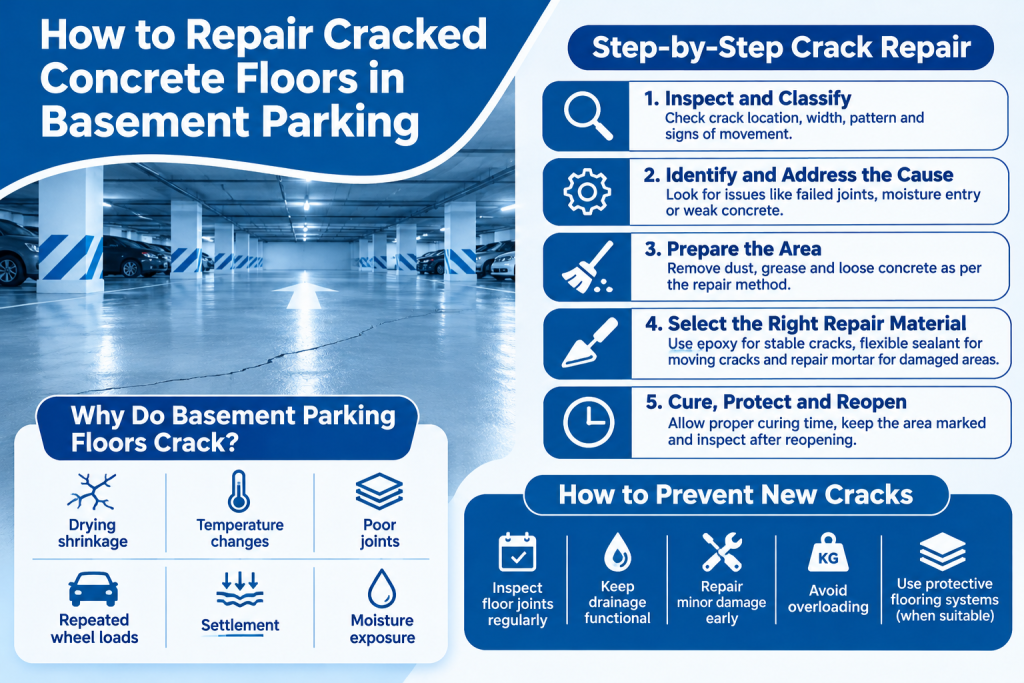
Common causes include drying shrinkage, temperature changes, poorly detailed joints, repeated wheel loads, settlement and water-related deterioration. Cracks around ramps, columns, drainage points and vehicle turning areas deserve particular attention because these zones can experience concentrated stress.
Step-by-Step Basement Parking Floor Crack Repair
1. Inspect and classify the cracks
Record each crack’s location, width and pattern. Check for water seepage, loose concrete, differences in level and signs that the crack is still moving. Wide, displaced or recurring cracks should be assessed by a qualified engineer before repairs are specified.
2. Identify and address the underlying cause.
Before sealing, investigate issues such as failed joints, moisture entry or weak concrete. A surface repair may not last if the cause of movement or deterioration remains unresolved.
3. Prepare the damaged area
Remove dust, debris, grease and unsound material using suitable tools and methods. Follow the selected repair product’s requirements for crack opening, surface profile and moisture condition.
4. Select the appropriate repair material
Dormant cracks may be suitable for rigid epoxy repair where bonding is required. Moving cracks generally need a flexible sealant or a designed joint treatment. Damaged edges or spalled areas may require compatible repair mortar. Material selection depends on crack behaviour and site conditions.
5. Cure, protect and reopen safely
Allow the specified curing period before vehicle traffic resumes. Mark off the repaired zone and follow manufacturer guidance on temperature, moisture and traffic loading. Inspect the repaired area after reopening.
How to Prevent New Cracks in Basement Parking
- Inspect floor joints and high-traffic turning points routinely.
- Keep drainage functional and address recurring seepage promptly.
- Repair minor edge damage before vehicle loads worsen it.
- Avoid overloading areas beyond the floor’s design capacity.
- Use protective flooring systems only after the concrete substrate is suitable.
Frequently Asked Questions
Often, yes. Localised, non-structural damage can frequently be treated. Extensive settlement, slab movement or structural distress may require engineered repairs or replacement.
Cracks should first be evaluated and repaired using a compatible method. Applying a coating over active cracks without suitable detailing may lead to the crack showing through again.
Sarvesh Concrete Floors Pvt. Ltd. provides concrete floor crack repair and car parking flooring solutions for residential societies, commercial premises and parking facilities. Contact the team to discuss an inspection and a repair approach suited to your floor’s condition.
Call: +91 8850563804 Email: Mdsarvesh@sacof.in
Related service: https://sacof.in/concrete-floor-crack-repair/